
Don't Miss Out: Tekstac & SHRM Research Report 2025 | |
This roundtable organized by Tekstac in collaboration with People Matters, brought together senior HR, L&D, and talent strategy leaders from diverse industries to discuss a critical question: How can we ensure that learning initiatives are truly driving business impact?
The discussion revolved around aligning learning programs with business needs, using data and technology to measure effectiveness, and designing targeted interventions that support both organizational goals and individual career growth.
• Learning programs are more effective when built around clear, business-aligned goals.
• Organizations are leveraging pre/post assessments, skill proficiency tracking, and analytics to measure learning ROI.
• Tailored interventions such as women-in-leadership or architect pathways are helping address specific talent gaps.
• AI-enabled platforms and opportunity marketplaces support self-paced, personalized growth.
• Close collaboration between L&D and business stakeholders ensures programs are relevant and impactful across departments.
July 25, 2024 | Bangalore
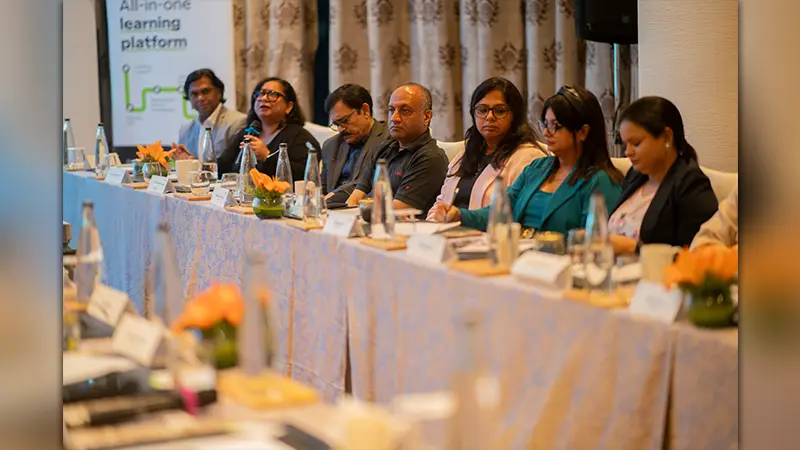
What made this roundtable stand out wasn’t just the discussion around learning; it was the clear shift in how organizations are rethinking talent transformation in a rapidly evolving world.
From “Why Upskill?” to “How Fast Can We Adapt?”
The conversation moved beyond the need for upskilling to the urgency of it. Leaders acknowledged that with disruptions like Generative AI, transformation is no longer optional. Organizations that fail to adapt quickly risk becoming irrelevant, much like past industry leaders who missed key technological shifts.
Continuous Learning as a Business Imperative
Unlike traditional learning models, the focus here was on always-on, continuous learning ecosystems. With shrinking attention spans and evolving workforce expectations, organizations are rethinking how learning is delivered.
Learning Experience Over Learning Delivery
A key differentiator discussed was the importance of creating engaging, self-driven learning experiences. In a hybrid world, employees are no longer “sent” to training, they choose to learn. This has pushed organizations to think like product and marketing teams, designing platforms and journeys that drive voluntary participation and ownership.
From Training Metrics to Talent Outcomes
The discussion emphasized moving beyond traditional metrics like course completion or training hours. Instead, organizations are tracking:
Rise of Skills Intelligence and Data-Driven Decisions
Another standout insight was the growing reliance on skills data as the foundation for decision-making. From baseline proficiency mapping to predictive skill analytics, organizations are leveraging data to:
No One-Size-Fits-All Approach to Learning
Leaders repeatedly highlighted that effective learning strategies are highly contextual and tailored. Whether it’s specialized career pathways, diversity-focused programs, or domain-specific academies, targeted interventions are proving far more impactful than generic learning initiatives.
Blending Learning with Real-World Application
A consistent theme was the importance of application over consumption. Organizations are increasingly integrating:
This ensures that skills are not just learned but demonstrated and applied.

Transforming tech upskilling with data-driven insights and holistic learning solutions
© 2026 Tekstac. Copyright and rights reserved.
Transforming tech upskilling with data-driven insights and holistic learning solutions
© 2024 Tekstac. Copyright and rights reserved.