
Don't Miss Out: Tekstac & SHRM Research Report 2025 | |
At SHRM 2.0, a powerful collaboration between SHRM and Tekstac culminated in the launch of the much-anticipated report “Tectonic Shifts to Transformational Growth: Evolving Role of L&D in the GenAI Era.”
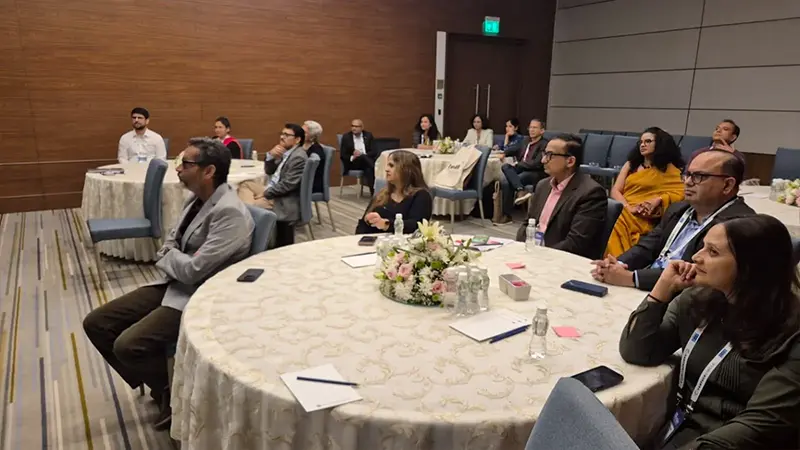
The event featured a thought leadership Round Table, where industry pioneers explored how AI is redefining learning, development, and workforce transformation.
The conference saw real-time discussions on how organizations can leverage AI for precision skilling and talent transformation.
The report and the round table reinforced one core message: the future of L&D is here, and it’s being shaped by GenAI-powered, data-driven strategies for building a future-ready workforce.
Tekstac’s product team also presented live demos at dedicated booth and engaged in insightful and meaningful conversations with the participants.
May 20 & 21, 2025 | Mumbai
We had an incredible two days at Jio World Convention Centre for SHRMTech 2.0, from high-energy conversations at our booth to focused discussions with L&D leaders across industries.
As a Platinum Partner, Tekstac engaged with HR and learning leaders, hosting conversations that matter, and unveiling something we’ve been working on for months.
1. The Big Moment: Report Launch
A key highlight of the event was the launch of our first collaborative report with SHRM India:
“Tectonic Shifts to Transformational Growth: Evolving Role of L&D in the GenAI Era.”
Built on insights from conversations with 50+ organiszations, the report captures how Indian enterprises are rethinking learning strategies to stay future-ready in a rapidly evolving AI landscape.
The report was unveiled by Vivek Ranjan (CHRO, Zensar), Krishnan Unni (Chief Business Officer, Tekstac), and Jasdev Ahuja (Senior Director & Lead Membership & PMQ at SHRM East), setting the tone for deeper discussions around the evolving role of L&D.
One idea stood out strongly through the launch and beyond:
The shift from talking about AI to proving business value.
2. What Leaders Spoke
Across panels, conversations, and our own interactions, a few themes consistently came up:
One of the most thought-provoking reflections from the event captured this well:
What happens when the skills you learn today risk becoming obsolete within months?
3. Perspectives from the Floor
In a compelling exchange between Andy Biladeau and Pranjal Sharma, the focus was on how organisations need to rethink transformation itself.
As highlighted by Krishna Kumar, Head of Marketing at Tekstac: “Transformation cannot be siloed.”
Another strong takeaway:
What stood out equally was SHRM’s own approach—being self-critical and actively evolving, rather than just advocating change.
4. Conversations That Went Deeper: The Roundtable
Beyond the mainstage, we hosted an exclusive roundtable with 15+ senior L&D and HR leaders on:
“Tectonic Shifts to Transformational Growth: Evolving Role of L&D in the GenAI Era.”
This wasn’t a panel or a presentation—it was a candid exchange on what’s actually changing inside organisations.
Leaders spoke openly about:
As one attendee, Amit Haldar (Director of L&D, Wipro) shared, the discussion brought forward “ideas, insights, and perspectives that clear the AI blur.”
5. Booth 38: Where Conversations Came Alive
Across both days, our presence at Booth 38 brought together a steady stream of HR and L&D professionals.
From live demos to hands-on conversations, we explored how organisations can:
It also became a space for more informal interactions, exchanging ideas, sharing challenges, and continuing conversations sparked on stage.

Transforming tech upskilling with data-driven insights and holistic learning solutions
© 2026 Tekstac. Copyright and rights reserved.
Transforming tech upskilling with data-driven insights and holistic learning solutions
© 2024 Tekstac. Copyright and rights reserved.