
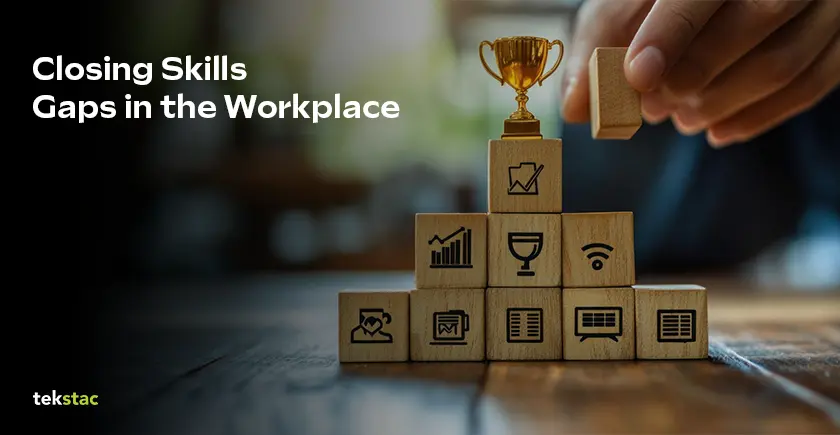
The job market is rapidly evolving with emerging technologies and automation. These changes are disrupting the workplace on multiple fronts keeping business and HR teams on the hook. According to the World Economic Forum reports that nearly half of all workers will require reskilling within the next few years as automation and AI continue to redefine job roles across industries.
This rapid technological acceleration is widening skill gaps across organizations. Just as an outdated smartphone struggles to run new apps, a company with outdated skills may fail to meet new market demands. Technological acceleration, particularly due to automation and artificial intelligence, has created a demand for new skills making old ones redundant.
To stay competitive, organizations must proactively identify and close these skill gaps by investing in integrated upskilling and reskilling programs. These initiatives should be comprehensive, future-focused, and designed to continuously upgrade both technical and professional competencies.
Here is a list of 6 groundbreaking skills that will be most valuable assets for individuals as well as organizations in 2026.
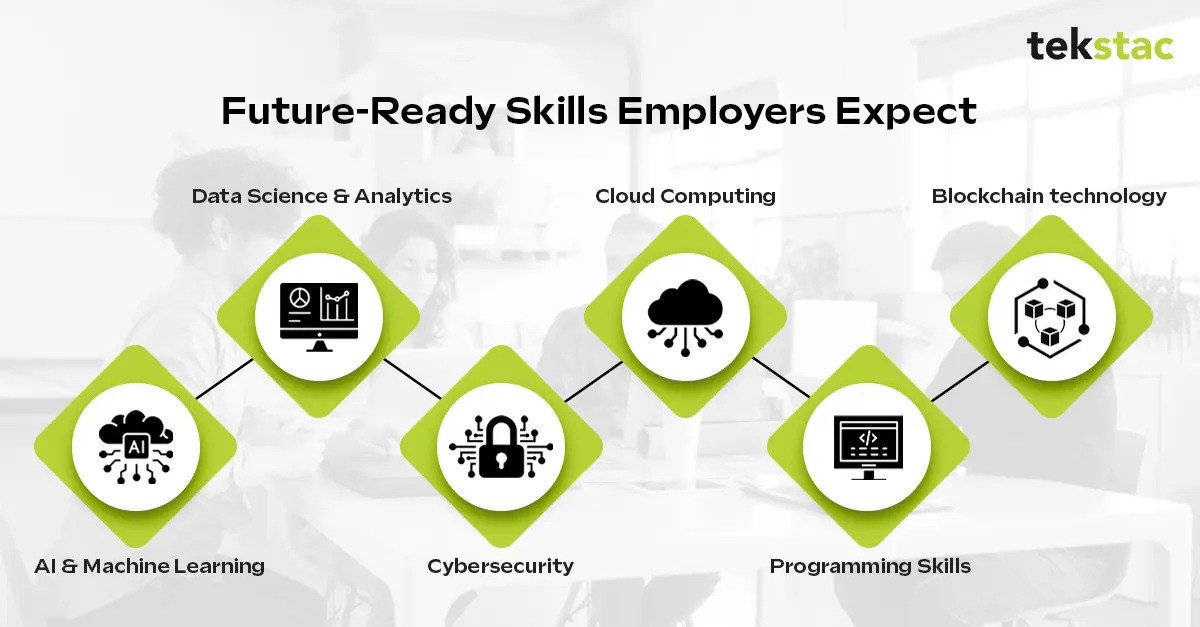
AI and Machine learning, particularly generative AI like OpenAI’s GPT models, are the most in-demand technologies today. These technologies have the power to significantly enhance productivity in the workplace through automation.
However, rapid adoption has also created critical skill gaps. While new roles in AI continue to grow, many organizations lack talent with the right expertise in AI development, deployment, governance, and ethical use. This gap makes it difficult for businesses to fully integrate AI into day-to-day operations.
To close these skill gaps, organizations must invest in structured upskilling programs that build AI, data literacy, and responsible AI capabilities, enabling teams to use AI effectively and gain a sustainable competitive edge.
Data has become one of the critical competencies of business as data-driven decisions offer a competitive advantage. The data analytics field has become vital for businesses due to its ability to offer intelligent insights.
The demand for data science skills is increasing. As per a LinkedIn report, the data science job postings have exhibited a 46% annual growth.
The data science skills are the pivot for customer behavior analysis, predictive modelling, market trend analysis and optimizing operations. There are multiple tools and platforms that must be learned to master data science.
Data security and compliance have become baseline requirements for most industries as they handle large data. Cybersecurity professionals are needed to identify vulnerabilities and implement security systems while ensuring compliance.
Cybersecurity is a valuable skill in such a business environment that faces heightened cyber threats. There is a growing need for cybersecurity professionals who can ensure data privacy and handle large-scale cyber threats.
In 2026, cybersecurity is likely to remain a valuable skill due to the widening skills gap. Organizations need to develop learning programs to strengthen the security of their data and IT infrastructure.
Cloud computing has become the epic center of modern IT infrastructure. The cloud platforms allow companies to scale up and provide operational agility.
Enterprises are embracing cloud technologies such as AWS, Azure, and others. The demand for professionals with skills in application development and management in cloud environments is increasing.
Organizations face cloud skill gaps and need trained professionals to design secure, resilient cloud infrastructures through structured learning and certification programs.
These three programming skills remain most in demand by employers as modern software development revolves around them. Python plays a key role in data science and artificial intelligence.
SQL is an indispensable element of data analytics and dataset management. While Java is a favorite choice for enterprise management and Android development.
The programmers with expertise in these technical languages are highly valued. Employers particularly value those programmers who can combine this technical expertise with software development and team skills.
Blockchain technology started from cryptocurrencies and has now become a major force transforming the supply chain and financial aspects of businesses. The demand for this technology has surged as it is considered to be secure in the digital ecosystem.
Blockchain expertise can be developed by gaining an understanding of cryptocurrency basics, distributed ledger technology and blockchain architecture. However, practical skill development requires hands-on experience in the development of blockchain platforms.
Both organizations as well as employees need to manage the skills gap for sustainable growth and development. Embracing learning, sharing knowledge and collaborating is the key to managing the skills gap.
Organizations need to build a learning ecosystem that is comprehensive, secure and scalable. Progressive organizations are leveraging learning platforms to upskill their existing employees to meet future demands.
Learning platforms help organizations identify and close skill gaps through targeted training, auto-evaluate assessments and effective learning interventions. By covering a broad spectrum of technologies and skills, these platforms support a continuous learning environment aligned with evolving business needs.
Employees can use these platforms to bridge their own skills gap by gaining real-time insights into training programs. Case-study–based learning and hands-on practice labs ensure well-rounded upskilling that translates directly into job performance.
The 2026 skill challenge requires a robust learning infrastructure to promote and cultivate a learning culture. It offers an opportunity for those who are willing to learn new skills and aim to apply them in creative ways.
Tekstac is a comprehensive learning platform designed to close skill gaps and future-proof workforces. Through hands-on practice labs and real-world scenarios, employees can confidently build complex technical skills that align with evolving business needs.
Be ready to tackle today’s skill gaps and tomorrow’s challenges—start your upskilling journey with Tekstac.
1. How can organizations effectively address skill gaps?
Organizations can address skill gaps by investing in continuous learning platforms, offering targeted upskilling programs, and aligning training with future job roles and technologies.
2. Why do skill gaps exist in 2026?
Skill gaps in 2026 exist due to rapid advancements in technology, especially AI and automation. As job roles evolve, many employees lack the up-to-date skills needed for emerging tasks, creating a mismatch between job requirements and workforce capabilities.
3. How do I overcome skill gaps as an employee?
You can overcome skill gaps by actively upskilling through online courses, certifications, and hands-on practice. Focus on high-demand areas like AI, data analytics, and cybersecurity, and choose platforms like Tekstac that offer real-world learning experiences.
4. What skills are employers looking for to close gaps?
Employers in 2026 seek skills in AI and machine learning, data science, cybersecurity, cloud computing, programming (Python, SQL, Java), and blockchain. These skills help businesses adapt to digital transformation and maintain a competitive edge.



Good shout.
Nicely drafted a content from intro to conclusion.