
Don't Miss Out: Tekstac & SHRM Research Report 2025 | |
Held in Gurgaon, this exclusive roundtable, in association with People Matters, convened senior Talent Leaders from Tech Services, Global Capability Centers (GCCs), and the Technology sector to explore the theme: “Tectonic Shifts to Transformational Growth: Evolving Role of L&D in the GenAI Era.” The session offered a strategic platform to delve into how AI is reshaping talent development, learning ecosystems, and future workforce strategies.
March 6, 2025 | Gurgaon

The People Matters GCC Summit, Bangalore brought together top Global Capability Centers (GCCs), making it a highly targeted and high-impact event. The attendees spanned HR functions: from L&D to Talent Acquisition and Fresher Hiring, leading to diverse and meaningful conversations.
The Tekstac booth saw strong engagement with leading industry leaders showing genuine interest, especially in areas like campus-to-corporate transitions and contextual learning.
July 25, 2024 | Bangalore
With 200+ attendees, 25+ speakers, and 13 ecosystem partners, the summit brought together diverse perspectives under one theme: unlocking the talent code for GCC growth.
As the day unfolded, our booth steadily became a space for curiosity and exchange.
People stopped by with different intents, some exploring how learning platforms are evolving, others looking to integrate AI into their talent strategies.
What stood out was how quickly these interactions moved beyond surface-level discussions.
From quick questions to deeper conversations, there was a clear interest in understanding how organisations can build scalable, future-ready learning ecosystems.
A recurring theme across interactions was the need for solutions that go beyond traditional approaches.
Leaders were looking for ways to:
Strengthen workforce capabilities in a measurable way
Personalise learning experiences across roles and levels
Seamlessly integrate with existing systems
Use AI to make learning more adaptive and relevant
These weren’t abstract conversations; they were grounded in real challenges, making each exchange more practical and impactful.
Being an exhibitor wasn’t just about presenting what we do; it was about listening to what the ecosystem needs.
The summit created space for honest dialogue, shared challenges, and new perspectives. It was as much about learning from the community as it was about contributing to it.
𝗧𝗵𝗲 𝗘𝗰𝗼𝗻𝗼𝗺𝗶𝗰 𝗧𝗶𝗺𝗲𝘀 𝗙𝘂𝘁𝘂𝗿𝗲 𝗙𝗼𝗿𝘄𝗮𝗿𝗱 𝗠𝗶𝗱𝗱𝗹𝗲 𝗘𝗮𝘀𝘁 𝗦𝘂𝗺𝗺𝗶𝘁 𝟮𝟬𝟮𝟱 in Dubai brought together a cohort of HR leaders and decision-makers from GCCs across functions including L&D, Talent Acquisition, and Campus Hiring. The event provided an ideal setting for Tekstac to showcase its platform and insights around GenAI-led talent transformation.
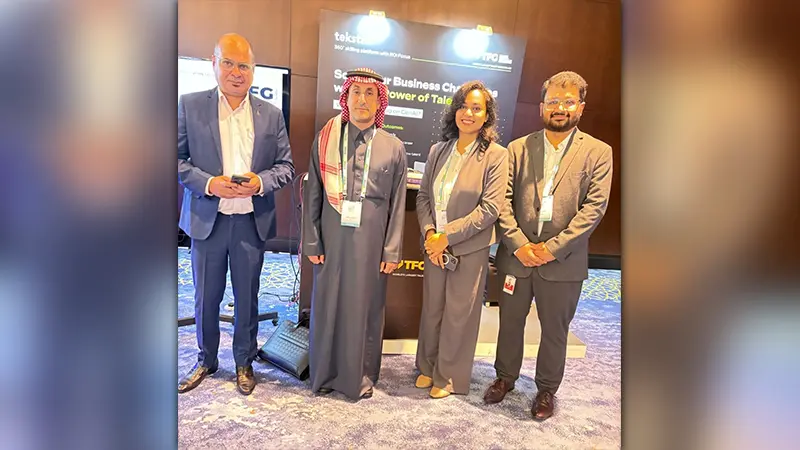
At the Tekstac booth, the focus was on “The Power of Talent”— delivered through a hands-on, no-brochures-needed experience. Attendees explored their own Skill Tag, a GenAI-powered feature, designed to identify core skill strengths. This immersive experience, backed by Tekstac’s ROI-focused learning outcomes, drew interest for its ability to support internal career mobility, real-time workforce decisions, and job readiness.
Feb 12, 2025 | Dubai
Two sessions, in particular, captured the mood of the event:
Vision 2035: Aligning CEO Ambitions with HR’s Game-Changing Role
This panel explored how HR is no longer just supporting business strategy but actively shaping it.
The conversation emphasised:
A session that struck the perfect balance between technology and humanity.
The core idea?
AI can enhance decisions, but leadership must remain deeply human.
Discussions revolved around:
For Tekstac, the summit wasn’t about making noise.
It was about starting the right conversations.
At Booth EP4, the focus was simple: How do you move from skilling efforts to measurable capability?
And that’s where SkillTag became the center of attention. Most visitors walked in with a familiar question:
“We’re already investing in learning, how is this different?”
And that’s where the conversation shifted.
Instead of talking about courses or content, we spoke about:
One interaction stood out.
A talent leader paused and said:
“We have data on learning. But we don’t have clarity on skills. That’s the gap.”
That moment summed up multiple conversations across the day.
It wasn’t about lack of learning.
It was about lack of visibility into what learning actually delivers.
Future Forward Middle East 2025 reinforced something we’ve been seeing consistently:
Connecting learning to real capability and business impact.
And we set foot on an international soil and felt humbled by the numerous interactions we had with our counterparts and leaders.
ETHR & Tekstac presented this exclusive roundtable, learning leaders from across industries gathered to explore how continuous learning can be embedded into business DNA, driven by measurable impact, AI-powered tools, and a culture of ownership and agility.
November 7, 2024 | Hyderabad
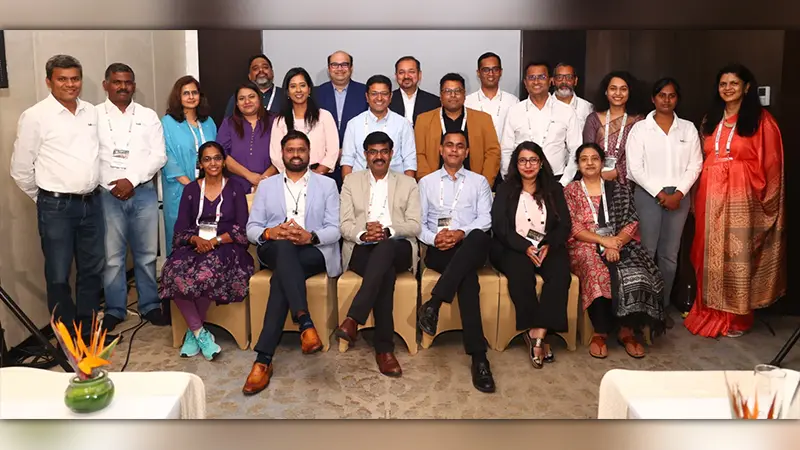
Leaders acknowledged that while investments in learning are increasing, the ability to measure impact and tie it back to business value is still evolving. And that gap is forcing a rethink.
There was also a strong consensus that generic learning no longer works. In an environment defined by constant change, organisations need learning models that are dynamic, role-specific, and closely aligned with real business needs.
What stood out most, however, was how the role of the learning leader itself is evolving. No longer confined to HR, L&D leaders are increasingly expected to operate as strategic business partners, accountable not just for learning delivery, but for business impact.
As Krishna Kumar, Head of Marketing – Tekstac, summed it up:
“It was insightful to see how learning leaders are evolving into strategic business contributors. What stood out was how impact is now being quantified—not just in outcomes, but in actual dollar terms for the business.”
Adding to this perspective, Krishnan Unni, Chief Business Officer & Head of GTM at Tekstac, captured the larger shift:
“There is a significant opportunity to reimagine skilling programs with AI playing a crucial role in making L&D more strategic and sustainable.
Previously, professionals could work for decades without needing to constantly upskill. That’s no longer the case. The lifespan of jobs is shrinking, required skills are expanding, and predicting what’s next is becoming harder. As a result, learning has evolved from a transactional activity to a lifelong capability—one that must be accessible, simpler, and available to everyone, not just a privileged few.”
At this exclusive roundtable with ETHR, industry leaders explored how companies are reimagining learning and development to align with business strategy, bridge generational gaps, and drive measurable impact across roles, domains, and functions.
The discussion revealed how enterprises are leveraging AI, data analytics, and hyper-personalized learning journeys to foster a culture of continuous growth.
Sep 19, 2024 | Pune

The shift from completion to capability
Leaders emphasized that traditional metrics like course completion or hours spent learning are no longer sufficient. What matters is whether learners can apply skills in real-world scenarios and how quickly they become productive.
Measuring ROI through performance, not participation
There was strong consensus that L&D must be tied directly to business outcomes. Metrics such as billability, productivity, and time-to-competency are becoming the new indicators of success.
Personalization is no longer optional
A one-size-fits-all approach to learning is increasingly ineffective. Organisations are prioritizing personalized learning journeys, aligned to both business needs and individual aspirations, to drive meaningful skill development.
From reporting to decision-making
Analytics is evolving from static dashboards to actionable intelligence. The focus is shifting toward answering critical questions like:
Who is ready? Where are the gaps? What action should we take next?
Continuous learning, not one-time interventions
Rather than isolated training programs, leaders highlighted the importance of ongoing, iterative learning cycles, supported by regular data analysis and feedback loops to continuously improve outcomes.
The balance between AI and human judgment
While AI is enabling scale, speed, and personalization, there was a clear recognition that human context, mentorship, and judgment remain essential, especially in nuanced decision-making and capability building.
In partnership with People Matters, this Round Table brought together leaders from across industries to explore how AI is revolutionizing the way organizations build future-ready talent. From AI-powered coaching simulations to predictive skill benchmarking and adaptive learning, participants shared real-world use cases of leveraging AI to drive personalized learning, workforce productivity, and measurable business outcomes.
September 12, 2024 | Chennai
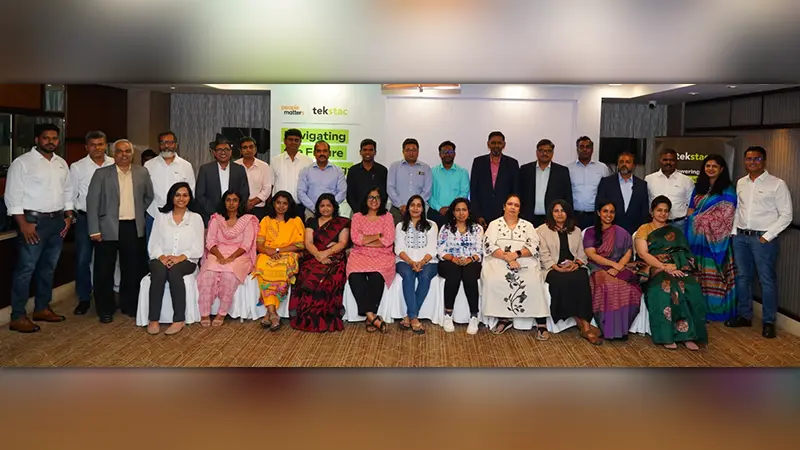
What made the discussion particularly compelling was the diversity of real-world applications shared by participants.
In healthcare, leaders spoke about how AI is already being used to support diagnostics, train interns through simulated environments, and leverage predictive analytics to better understand patient demographics and lifestyle patterns. These applications are not only improving accuracy but also enhancing the quality of training and decision-making.
Discussions also highlighted how AI is also being used to:
These use cases emphasised how AI is gradually becoming embedded into everyday learning workflows.
Another strong perspective that emerged was the need to rethink how learning success is measured.
Organisations are moving beyond completion rates and feedback scores, focusing instead on how learning translates into performance and business outcomes.
With the help of analytics, L&D teams can now proactively identify skill gaps, predict learning needs, and assess employee readiness for future roles.
As discussed during the session, the real value lies in linking learning outcomes to metrics such as productivity, efficiency, and time-to-deployment.
The conversation also acknowledged that while AI is promising, it is not without limitations.
Saransh Agrawal, Head of Learning at Cognizant, spoke about the current challenges in fully addressing complex L&D needs through AI alone. This highlighted an important point: AI must complement human expertise, not replace it.
Echoing this, Chhaya Ramani, Global Learning and Development Partner at AstraZeneca, emphasized the potential of AI in predicting learning needs, enabling organisations to design more targeted and personalised interventions.
Maya Rajaguru, Head of Learning and Development at Apollo Hospitals, added another dimension, highlighting how L&D functions can evolve into profit centres when learning initiatives are closely aligned with business objectives.
At the heart of the discussion was a shared focus on outcomes.
Krishnan Unni, Chief Business Officer at Tekstac highlighted Tekstac’s “Objective to Outcome” methodology, which centres on aligning every learning initiative with a clearly defined business goal. This approach ensures that learning is not just delivered but designed to create measurable impact.
Participants also explored the growing role of generative AI in assessments and adaptive learning systems, tools that can evolve with organisational needs and make learning more agile and responsive.
The roundtable concluded with a strong consensus; learning is no longer a support function; it is becoming a strategic driver of business growth.
With AI, analytics, and emerging technologies shaping the future, organisations have an opportunity to transform learning into a function that delivers measurable value.
For those willing to embrace this shift, the path is clear: move beyond training, focus on capability, and align learning with outcomes that truly matter.
This roundtable organized by Tekstac in collaboration with People Matters, brought together senior HR, L&D, and talent strategy leaders from diverse industries to discuss a critical question: How can we ensure that learning initiatives are truly driving business impact?
The discussion revolved around aligning learning programs with business needs, using data and technology to measure effectiveness, and designing targeted interventions that support both organizational goals and individual career growth.
• Learning programs are more effective when built around clear, business-aligned goals.
• Organizations are leveraging pre/post assessments, skill proficiency tracking, and analytics to measure learning ROI.
• Tailored interventions such as women-in-leadership or architect pathways are helping address specific talent gaps.
• AI-enabled platforms and opportunity marketplaces support self-paced, personalized growth.
• Close collaboration between L&D and business stakeholders ensures programs are relevant and impactful across departments.
July 25, 2024 | Bangalore
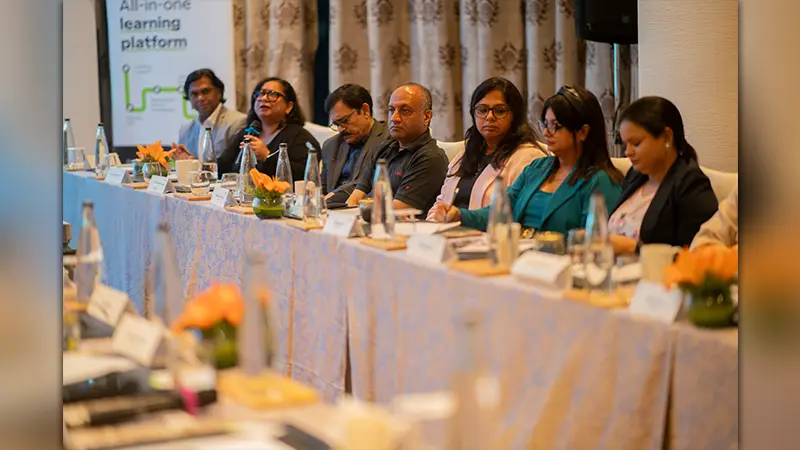
What made this roundtable stand out wasn’t just the discussion around learning; it was the clear shift in how organizations are rethinking talent transformation in a rapidly evolving world.
From “Why Upskill?” to “How Fast Can We Adapt?”
The conversation moved beyond the need for upskilling to the urgency of it. Leaders acknowledged that with disruptions like Generative AI, transformation is no longer optional. Organizations that fail to adapt quickly risk becoming irrelevant, much like past industry leaders who missed key technological shifts.
Continuous Learning as a Business Imperative
Unlike traditional learning models, the focus here was on always-on, continuous learning ecosystems. With shrinking attention spans and evolving workforce expectations, organizations are rethinking how learning is delivered.
Learning Experience Over Learning Delivery
A key differentiator discussed was the importance of creating engaging, self-driven learning experiences. In a hybrid world, employees are no longer “sent” to training, they choose to learn. This has pushed organizations to think like product and marketing teams, designing platforms and journeys that drive voluntary participation and ownership.
From Training Metrics to Talent Outcomes
The discussion emphasized moving beyond traditional metrics like course completion or training hours. Instead, organizations are tracking:
Rise of Skills Intelligence and Data-Driven Decisions
Another standout insight was the growing reliance on skills data as the foundation for decision-making. From baseline proficiency mapping to predictive skill analytics, organizations are leveraging data to:
No One-Size-Fits-All Approach to Learning
Leaders repeatedly highlighted that effective learning strategies are highly contextual and tailored. Whether it’s specialized career pathways, diversity-focused programs, or domain-specific academies, targeted interventions are proving far more impactful than generic learning initiatives.
Blending Learning with Real-World Application
A consistent theme was the importance of application over consumption. Organizations are increasingly integrating:
This ensures that skills are not just learned but demonstrated and applied.

Transforming tech upskilling with data-driven insights and holistic learning solutions
© 2026 Tekstac. Copyright and rights reserved.
Transforming tech upskilling with data-driven insights and holistic learning solutions
© 2024 Tekstac. Copyright and rights reserved.