
The world is racing toward an AI-powered future, with businesses investing heavily in artificial intelligence. Yet, despite grand ambitions, many companies struggle to turn AI potential into real business impact — a disconnect increasingly known as the AI impact gap. The latest BCG AI Radar 2025 report reveals a stark contrast between AI investments and actual value realization. With AI spending projected to surge by 60% in the next three years, the question remains: How can organizations bridge the AI impact gap?
The AI impact gap refers to the disconnect between AI investment and measurable business value. While companies spend heavily on artificial intelligence, many fail to translate pilot projects into scalable, revenue-generating outcomes.
One in three companies globally is planning to invest over $25 million in AI in 2026. While AI and GenAI rank among the top three strategic priorities for 75% of executives, only 25% are witnessing significant returns. The challenge lies not in the technology itself but in how it is deployed, scaled, and integrated into everyday business operations.
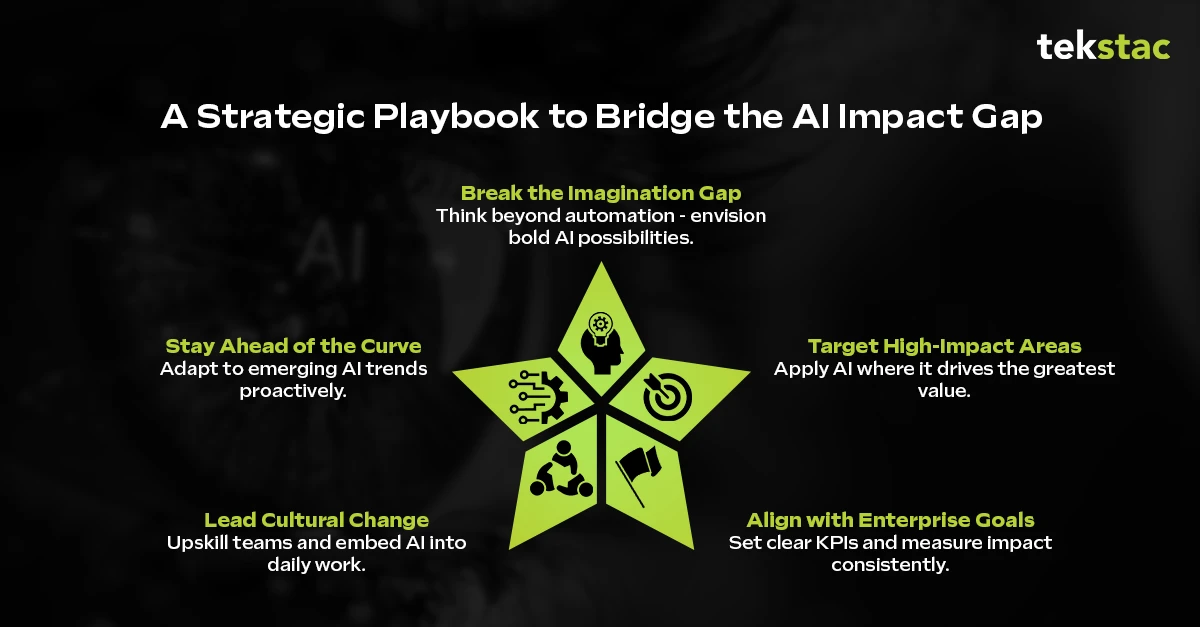
Leading organizations approach AI differently. Instead of scattering their investments across multiple pilots with diluted impact, they focus on three strategic plays:
While most companies allocate only 27% of their AI budget to high-impact initiatives, leading firms dedicate over 80% to reshaping functions and driving innovation.
Surprisingly, 60% of companies fail to track financial KPIs linked to AI investments. Without clear performance metrics, organizations risk losing sight of AI’s bottom-line impact. Leading firms, on the other hand, adopt a disciplined approach, defining goals, measuring top- and bottom-line results, and continuously refining their AI strategies.
AI success isn’t just about algorithms, it’s about people and processes. The best-performing companies follow the 10-20-70 principle:
Despite the rise of AI, only 6% of companies have trained over 25% of their workforce in AI tools. Without widespread AI upskilling, businesses will struggle to fully capitalize on their investments.
While AI promises efficiency and innovation, it also brings risks. The top concerns for executives include:
Cybersecurity remains a major weak spot, with 76% of executives acknowledging the need for stronger AI security measures. Companies that proactively address these risks will gain a competitive edge in trust and reliability.
2026 marks the rise of AI agents, intelligent systems capable of learning, reasoning, and taking actions on behalf of users. While 67% of companies are exploring AI agents as part of their transformation strategy, true success lies in their thoughtful application. Leaders must avoid the hype, focus on targeted implementations, and ensure AI agents complement human capabilities rather than replace them.
To bridge the AI impact gap, businesses must rethink their AI strategies. The most successful organizations maximize AI value by:
The future belongs to those who can not only invest in AI but also extract real value from it. The time to act is now, before the AI impact gap widens further.
Based on insights from the BCG AI Radar 2025 report.
Experiential learning for leadership development is the fastest-growing shift in how organizations build their next generation of leaders — replacing passive instruction with active experience, reflection, and real-world application.
The best leaders do not emerge from lectures. They grow by facing genuine challenges, making real-time decisions, and reflecting outcomes.
Leadership is about making tough calls in unpredictable situations. In high-pressure moments, leaders must decide, adapt, and lead in real time, often with incomplete information and conflicting priorities.
Studies show that people retain up to 75% of what they learn through experiential methods, compared to just 10% from traditional lectures, according to the National Training Laboratories (NTL) Learning Pyramid model.
Companies spend billions on training programs yet leaders often fall back into old habits once they return to their daily routines.
Why?
Because real leadership challenges aren’t solved in classrooms—they happen in high-pressure moments, under uncertainty, and with real consequences.
No Real-World Application
Sitting in a workshop doesn’t prepare leaders for messy, high-stakes decisions where emotions, time pressure, and unexpected challenges come into play.
Lack of Organizational Support
Even well-trained leaders can’t apply new skills if company culture, outdated processes, or resistant teams don’t support them.
Training in Isolation
Leadership isn’t a solo act. If the entire organization isn’t evolving, even the best-trained leaders will struggle to make an impact.
Leadership isn’t learned—it’s lived. Companies that want real change must integrate learning into daily work, redesign systems, and create environments where leadership thrives.
Experiential leadership development replaces passive instruction with active practice — placing leaders in realistic, high-pressure scenarios where they must decide, adapt, and lead in real time, developing instinctive capability that classroom training cannot replicate.
Mastering a skill requires doing it — not reading about it. Leadership, problem-solving, and critical thinking emerge from experience, not instruction.
Leadership, problem-solving, and critical thinking don’t come from theory alone; they come from experience.
Here’s why shifting from theory to experiential learning isn’t just important—it’s necessary.
The truth is, knowledge that stays theoretical is wasted potential. Until people engage with what they’ve learned, test it in different environments, and adapt it to new challenges, it never becomes truly useful.
Experiential learning builds leadership capability by replicating the conditions under which leaders need to perform — high stakes, incomplete information, and real consequences. Simulation-based training is the mechanism: leaders face scenarios with real decision weight, receive immediate feedback, and iterate until responses become instinctive.
Every great leader must go through the fire, testing their decision-making, adaptability, and communication skills before they ever step into high-stakes situations.
That’s why simulation-based training isn’t just useful—it’s non-negotiable.
Here’s why companies swear by it:
Leadership isn’t theory—it’s action. And simulation-based training ensures you’re battle-ready before the real fight begins.
With business landscapes becoming more unpredictable, organizations need leadership development strategies that mirror real-world complexity.
This is where technology-driven experiential learning solutions are making a measurable impact, helping companies build adaptable, future-ready leaders.
Organizations investing in technology-driven experiential learning solutions aren’t just training leaders—they are equipping them with the mindset, agility, and strategic acumen required to navigate complexity.
The future of leadership isn’t about static lessons—it’s about dynamic experiences that prepare leaders to thrive in uncertainty and drive real impact.
Companies that are winning—the ones redefining leadership development—aren’t relying on outdated methods.
At the end of 2024, a global pharmaceutical company faced a leadership challenge it could no longer ignore. That’s when they made a bold move. Instead of relying on theories, they turned their leadership development program into a real-world lab.
Through immersive simulations, AI-driven coaching, and live crisis scenarios, leaders weren’t just learning; they were experiencing. The shift was immediate. Executives who had once hesitated in boardroom debates were now navigating complex product recalls and regulatory hurdles in risk-free but high-intensity environments.
By December 2024, leadership confidence had skyrocketed, and decision-making agility improved so dramatically that the company saw a 30% reduction in costly delays.
Fast forward to 2025. Inspired by this success, the company expanded its experiential learning model across global offices. Now, instead of hypothetical case studies, leaders in Europe and Asia were stepping into AI-powered crisis simulations where they had to make tough calls in real-time—managing supply chain breakdowns, handling media scrutiny, and rallying teams under pressure.
The impact?
By Q2 2025, the company reported a measurable increase in leadership retention and faster transitions from mid-level managers to senior roles.
For the first time, leadership training wasn’t just a checkbox—it was a competitive advantage.
The lesson?
The future of leadership isn’t about passively absorbing knowledge; it’s about experiencing, reflecting, and evolving in real-time. Companies that embrace this shift won’t just train leaders—they’ll build them.
Learning isn’t just about taking in information—it’s about experiencing it. Neuroscience proves that the more we engage, the more we retain. When we actively participate in learning, the amygdala, the brain’s emotional processor, attaches significance to the experience, making it stick. At the same time, the hippocampus, the center for memory, encodes these moments far more effectively than passive learning ever could.
But the real magic happens when thought meets action. Science calls this embodied cognition—the idea that we don’t just think with our brains; we think with our bodies. When leaders make decisions under pressure, navigate uncertainty, or solve problems in real-world simulations, their brains forge stronger neural pathways, making complex skills second nature. Add in the dopamine reward system, which kicks in when we overcome challenges, and suddenly, learning becomes instinctive, automatic, and deeply ingrained.
This is why top companies invest in platforms like Tekstac — an enterprise AI skilling platform that delivers immersive, simulation-based leadership development with real-time AI coaching, behavioral analytics, and data-driven progress tracking — to make experiential learning scalable and measurable across global teams.
Today’s leaders are navigating a world defined by volatility, uncertainty, complexity, and ambiguity (VUCA).
A global 2024 study by Harvard Business Publishing confirmed that 70% of organizations now recognize that leadership demands real-world mastery. And as AI, automation, and digital transformation reshape industries at lightning speed, the ability to adapt, strategize, and execute in real-time is more crucial than ever.
Insight Experience’s award-winning leadership programs in 2024 demonstrated how simulations, real-world problem-solving, and immersive coaching are shaping leaders who don’t just know what to do—they instinctively do it when it matters most.
Experience Experiential Learning in Action— See how Tekstac’s platform builds future-ready leaders through immersive, data-driven simulations. 👉 Request a Demo
1. What is experiential learning in leadership development?
Experiential learning in leadership development is an approach where leaders build capability through direct experience rather than theory — engaging in simulations, real-world problem-solving, and reflective practice rather than passive instruction. Based on David Kolb’s Experiential Learning Cycle, the process moves through four stages: concrete experience, reflective observation, abstract conceptualization, and active experimentation — ensuring each experience translates into improved judgment and repeatable skill.
2. Why is experiential learning more effective than traditional leadership training?
Experiential learning outperforms traditional training because it engages the brain’s memory and emotional systems simultaneously. Research shows people retain up to 75% of what they learn through experiential methods compared to just 10% of lectures. Traditional training fails to transfer because it removes leaders from the conditions — pressure, uncertainty, and real consequences under which leadership skills are needed. Experiential methods replicate those conditions safely.
3. How does technology enhance experiential learning for leadership development?
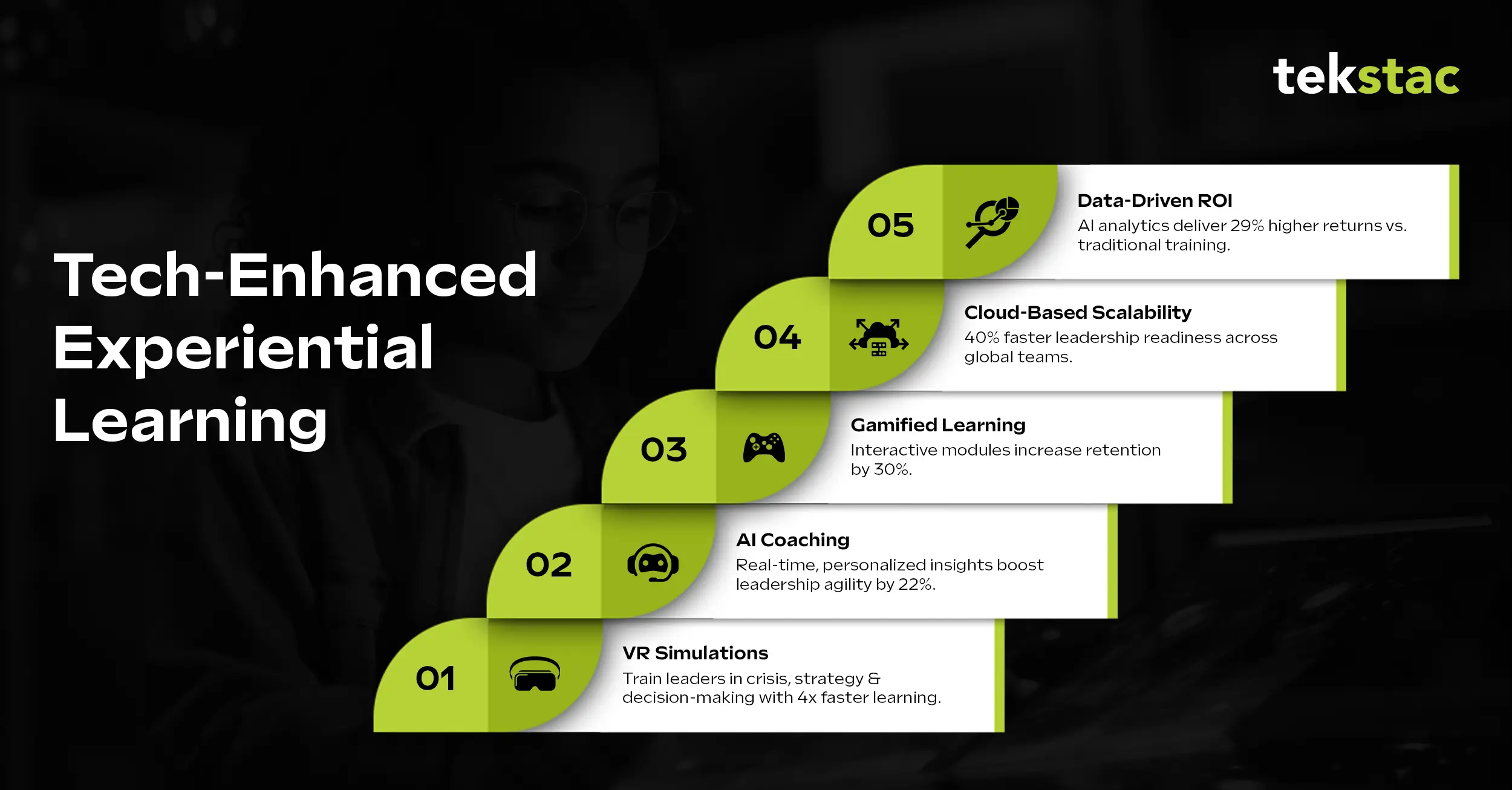
Technology enhances experiential learning for leadership development by making high-stakes scenarios accessible at a scale. VR simulations accelerate learning by 4x and improve application confidence by 275% compared to classroom training. AI coaching platforms analyze decision patterns in real time and deliver personalized feedback — leading to a 22% increase in strategic decision-making accuracy. Cloud-based platforms ensure consistent, standardized development across remote, hybrid, and on-site teams globally.
4. How do organizations measure the ROI of experiential learning programs?
Organizations measure experiential learning ROI through four metrics: leadership readiness rate (how quickly participants move from development to deployment), decision-making speed and accuracy improvement, retention rates among program participants compared to non-participants, and business outcome indicators such as reduction in project delays or faster transitions from mid-level to senior roles. Companies using AI-driven learning analytics in experiential programs report 29% higher ROI than those relying on traditional training methods.

Imagine walking into a room full of leaders, all discussing their generative AI strategies. Certifications, courses, and training programs dominate the conversation, and every organization is racing to close skills gaps. Yet, one company is silent, confident, and observably ahead—its capabilities are evident in its results, but the source of its success remains invisible.
What’s their secret? Stealth skilling: a deliberate strategy to build capabilities competitors can’t replicate or even detect until it’s too late.
In the generative AI era, the most critical skills aren’t taught in public classrooms or certification programs. They’re embedded deep into workflows, codified into systems, and honed silently in the shadows of innovation. For companies that understand this, the focus has shifted from reacting to today’s needs to creating future-proof capabilities. They’re not playing to catch up—they’re designing capabilities that will leave their competitors irrelevant.
The traditional approach to workforce skilling is broken. Companies identify a gap, train their workforce, and deploy talent to fill it. But this endless cycle of identifying and closing gaps creates a perpetual lag. By the time a workforce catches up, the industry has already moved on.
Stealth skilling flips this paradigm. It’s not about filling gaps; it’s about predicting and embedding future capabilities before they’re even needed. In 2024, while 75% of companies are adopting AI, only 35% of talent have received AI training in the last year (Randstad, 2024). This gap highlights why reactive training alone isn’t enough—organizations need a stealth approach to build future-ready capabilities.
Organizations at the forefront of this revolution are rethinking how knowledge is captured, applied, and scaled. For example, rather than training teams on reactive problem-solving, they’re automating expertise into systems that anticipate issues before they arise. This isn’t just operational efficiency; it’s strategic foresight.
Take knowledge management as a cornerstone. In most companies, expertise is siloed, locked away in the minds of employees or scattered across disconnected systems. Stealth skilling demands a different approach: codify that expertise into AI systems so that it becomes institutional knowledge, always accessible and never lost. For a CXO, this means no more scrambling to replace expertise when key employees leave or retire. Instead, the knowledge evolves within AI systems, continuously refining itself.
The true strength of stealth skilling lies in its invisibility. These capabilities aren’t broadcasted in glossy training catalogues or LinkedIn updates. Instead, they manifest in quiet but transformative outcomes: faster decision-making, predictive insights, and processes that adapt autonomously to market changes. Competitors don’t see it happening until they’re already left behind.
Picture a company that embeds real-time signal detection into its decision-making workflows. While others are still analyzing lagging indicators, this company adjusts in real-time to weak market signals, capitalizing on opportunities or mitigating risks before anyone else notices. These capabilities are the result of deliberate, behind-the-scenes skilling investments—not in employees alone but in building the AI systems that augment them.
Unlike traditional skilling programs, stealth skilling isn’t about incremental improvements. It’s about creating a gap so wide that competitors can’t bridge it. By the time rivals notice, the playing field has already tilted irreversibly.
Stealth skilling doesn’t just happen. It requires a mindset shift from leaders, particularly at the CXO level. The first step is recognizing that today’s most valuable capabilities aren’t reactive—they’re proactive. Leaders must identify processes critical to long-term differentiation and begin embedding expertise into systems, not just people.
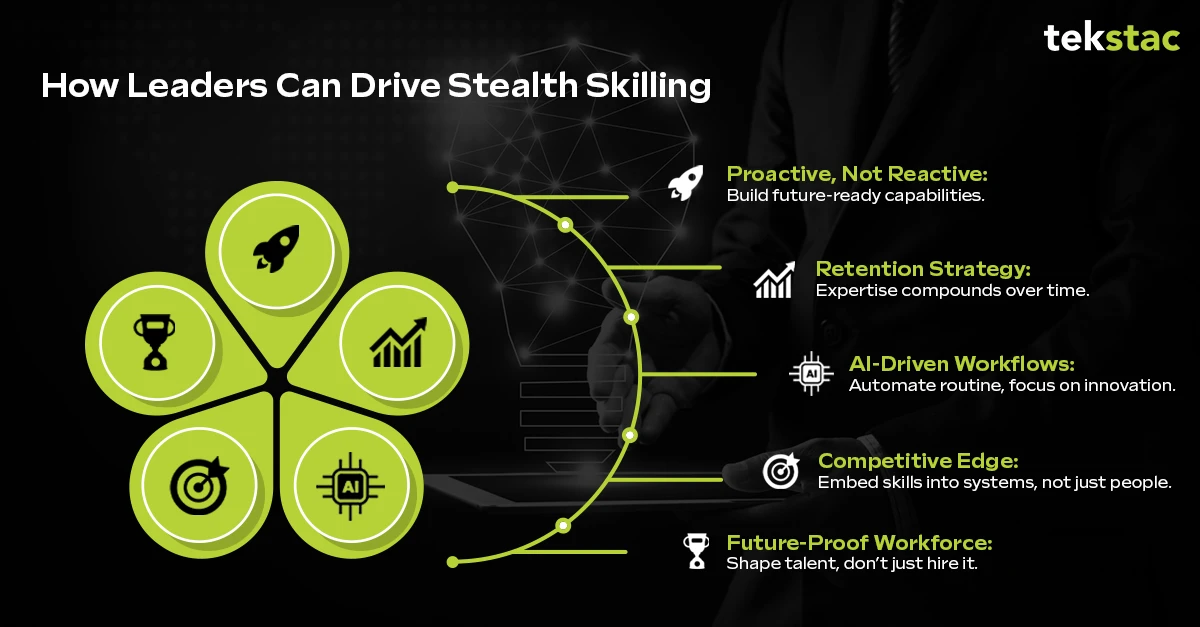
The focus should also extend to retention. Employees equipped with future-ready capabilities feel more engaged and aligned with the company’s vision. Retention isn’t just about reducing churn—it’s about building an ecosystem where expertise compounds over time, creating lasting competitive advantages. Moreover, as the war for talent intensifies, this approach signals to the market that your organization isn’t just hiring for today but shaping the workforce of tomorrow.
Operationally, this translates into investing in knowledge capture systems that scale expertise across teams. For instance, workflows that previously relied on manual judgment can be enhanced with AI-driven decision layers. The result? Teams can focus on innovation, while routine tasks are handled autonomously.
In the world of generative AI, where visible strategies are quickly commoditized, stealth skilling is the competitive moat that can’t be breached. It ensures not just survival but dominance. By embedding expertise into AI systems, predicting skill needs before they arise, and continuously refining capabilities, organizations can stay ahead of market shifts and competitor plays.
For CXOs, the question isn’t whether to invest in stealth skilling—it’s how quickly they can implement it before others do. This is the difference between leading the AI race and being left behind in a game you never even realized was happening.
Stealth Skilling embeds invisible, future-ready capabilities into workflows and AI systems, creating a competitive advantage that rivals can’t replicate. Organizations that implement it proactively stay ahead in the generative AI era.
1. How is stealth skilling different from traditional training?
Traditional training fills current skill gaps; stealth skilling predicts and builds capabilities proactively.
2. Why is stealth skilling important for enterprises?
It creates a competitive moat that is hard to replicate, enabling faster decisions and future-proof operations.
3. Who should lead stealth skilling initiatives?
CXOs and senior leaders should drive the strategy, embedding expertise into systems and aligning the workforce for long-term advantage.
4. What is a stealth strategy?
A stealth strategy is a business approach where initiatives, capabilities, or innovations are developed quietly to gain competitive advantage before others notice.
Generative AI has rewritten the rules of competition. It’s no longer about whether you have the technology; it’s about whether you have teams that can use it effectively. Any company can buy AI tools, but not every company can be good at workforce capability building that elevates those tools into real business advantages. To address this workforce readiness gap, companies have to align employees with AI’s transformative capabilities and intensify their focus on upskilling and reskilling initiatives.
But reacting to skill gaps after they appear just isn’t good enough anymore. In an environment where insights and automation can shift overnight, you need a predictive approach to skilling—one that equips your teams for today’s tasks and tomorrow’s unknowns. Businesses that get this right will lead in innovation; those that don’t will watch from the sidelines.
For many years, skilling was a catch-up game: identify a gap, send employees to training, and hope they come back ready. But when AI can alter entire value chains at record speed, this model falls short.
Take, for example, a corporate L&D team that rolls out an AI-powered learning platform to personalize employee development. If managers and employees don’t know how to leverage it and how to interpret skill recommendations, track progress, or apply insights on the job, the platform’s potential is wasted.
The antidote is predictive skilling: using AI in workforce development and data-driven foresight to see what capabilities will matter next and starting to build them before they’re mission-critical. In fact, PwC’s 2025 AI Jobs Barometer finds that AI-exposed roles are evolving 66% faster than others, highlighting the urgent need to proactively upskill teams for emerging demands.
To measure whether your workforce is future-ready, consider the following five markers. Think of them as your “survival index” in the AI era:
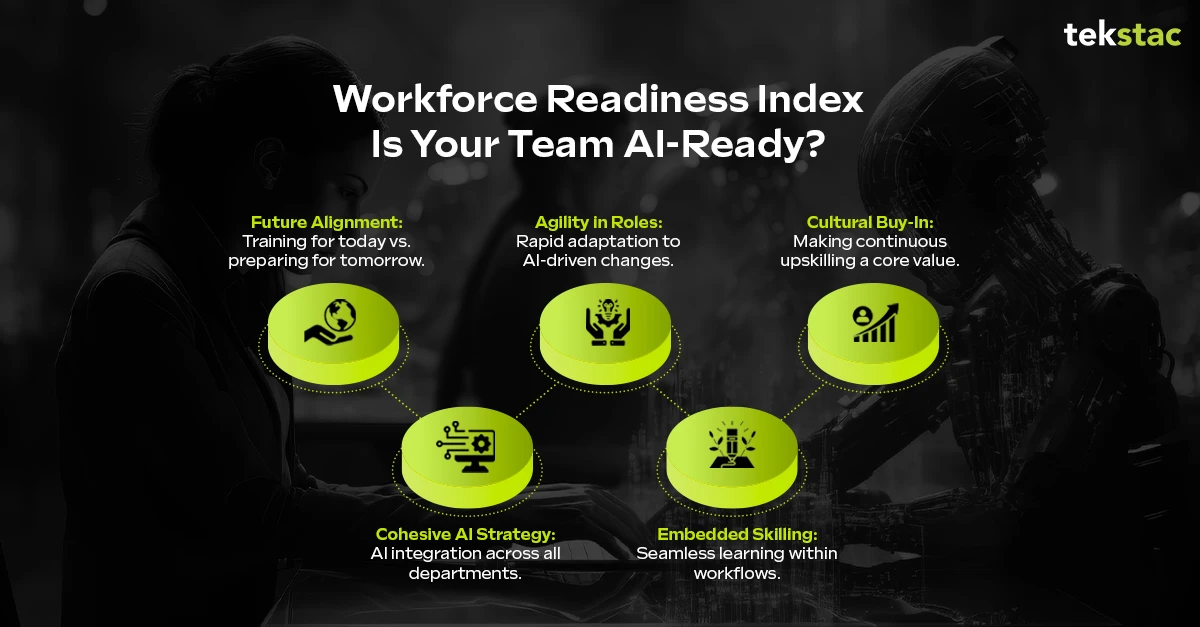
Score low on any dimension, and you risk lagging behind companies that make skilling a constant, proactive discipline.
In an AI-native organization, the boundaries of job roles blur. When machine-learning models provide real-time insights, employees must be ready to adapt on the fly. One consumer goods company, for instance, redefined its data analyst roles to include rapid experimentation with AI-driven product recommendations. The transformation led to more effective campaigns and faster decision-making—because teams were primed to pivot as soon as new insights surfaced.
To foster this kind of flexibility, leaders need to:
Failing to skill up your teams isn’t just a missed opportunity—it’s a potential death sentence in today’s hyper-competitive market. Studies show that when AI projects underperform, the culprit is often a workforce that isn’t equipped to interpret and apply AI outputs effectively. You can deploy all the cutting-edge tools you want, but without AI-ready talent, your investments remain underutilized, your results underwhelming.
At the end of the day, technology alone won’t save you. The true differentiator is a workforce that knows how to harness AI in a way that drives real, measurable impact. And as AI continues to evolve, so must your approach to skilling. The question isn’t whether you need to do this; it’s whether you’ll do it fast enough to stay relevant.
1. What does workplace readiness mean?
Workplace readiness refers to a skilled generation of leaders who have the knowledge, skills and abilities required to carry out a series of professional tasks.
2. How do you measure workforce readiness?
Workforce readiness goes beyond skill completion rates or training hours. You can measure it across three dimensions:
3. Why is workforce readiness important for AI adoption?
Workforce readiness is crucial for AI adoption because employees need the right skills, mindset, and adaptability to effectively use AI tools and translate them into real business impact.
4. How are U.S. enterprises addressing the workforce readiness gap?
U.S. enterprises are tackling the workforce readiness gap by building AI and digital skills through targeted training and education partnerships. They’re prioritizing upskilling over replacement, using data and skill analytics to spot gaps early, and embedding AI adoption into everyday work. Many are also shifting to skills-based hiring and creating new career pathways to stay future-ready.
Job architecture is a structured framework that organizes an organization’s roles into defined job families, levels, and career paths, creating a consistent, transparent system for titles, responsibilities, compensation, and progression. It answers three foundational workforce questions: what roles exist, how they relate to each other, and what it takes to advance from one to the next. Without it, organizations default to ad hoc hiring decisions, inconsistent pay structures, and career paths that exist only in managers’ heads.
According to Gartner, 86% of HR leaders believe career paths at their organizations are unclear for many employees; and a well-designed job architecture framework is the structural fix that makes career paths visible, credible, and consistent at scale.
Job architecture matters because the absence of it creates compounding, measurable problems. Without a standardized framework, compensation becomes inconsistent; similar roles get paid differently based on which manager hired them. Career paths become invisible; employees cannot see how to advance, so they look elsewhere.
Workforce planning becomes reactive — HR fills vacancies rather than building capability pipelines. Gartner research shows that 44% of companies do not provide career paths that encourage or compel employees, and 75% of those employees are actively looking at positions at other companies’ Training Orchestra. Job architecture directly addresses this: by defining job families, levels, and the skills required at each stage, it creates the visible career infrastructure that keeps employees engaged and gives HR the data to plan rather than react.
The need for a clear and equitable organizational structure. Leaders should practice real-time mapping toward career progression to promote such conversations. For potential employers, it streamlines hiring and performance management and salary benchmarking.
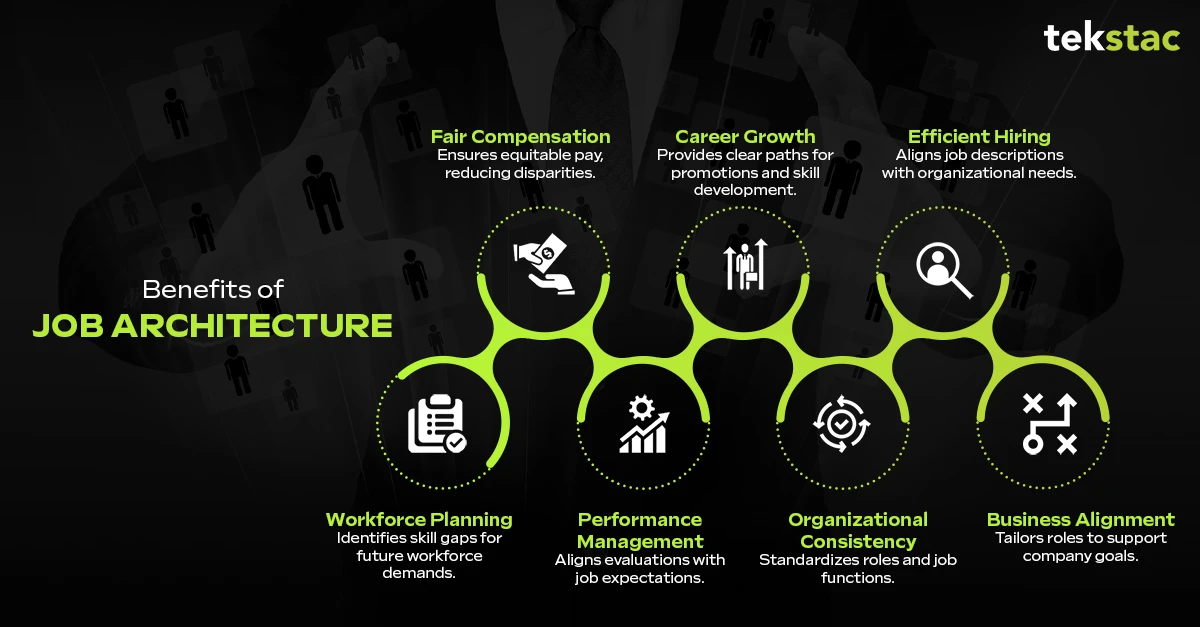
A job architecture framework is the complete operational structure built on top of job architecture principles ; it includes the job family taxonomy, the levelling criteria for each family, the skills and competency requirements at each level, the compensation bands mapped to each level, and the governance process for maintaining the framework as the organization evolves.
Where “job architecture” describes the concept, a “job architecture framework” describes the working system. A functional framework typically covers four layers: job families (broad groupings of related roles such as Engineering, Sales, or People Operations), job functions (sub-groupings within each family), job levels (individual contributor, senior, lead, principal, director and above), and career tracks (specialist vs. management paths within each function).
According to SHRM’s 2025 Talent Trends data, over the past three years the average job has seen 32% of its skills change; which means a job architecture framework without a regular review cycle becomes outdated faster than most organizations realize. Build in a quarterly review cadence as standard.
A good place to begin is by researching the company’s strategic position regarding its mission, vision, and scope of strategic objectives. This step is rather important because the job architecture should correspond to and also stimulate the organization’s direction.
For instance, when a company targets innovation, the jobs must generate positions responsible for research and creativity. Awareness of these goals helps ensure the framework can foster development, optimization, and overall compliance with major strategic objectives.
Take a comprehensive review of the organization’s existing roles, job descriptions, and reporting structures. Look for discrepancies among the levels, areas where responsibilities are closed or missing, and hierarchy gaps.
In some cases, there may be several job titles that are similar or critical roles that are not clearly defined. This assessment is an important part of reorganization and an effective way to avoid not including an important task.
Organize jobs with activities or tasks in clusters of their day-to-day activities, responsibilities or skills needed. For example, assigning customer assistance, sales, and marketing jobs can be placed categorically under a broader function.
This classification helps identify duplications of work and match positions with the company’s functional needs It also helps employees visualize their relationships to other positions within the company.
Explain the purpose and responsibilities, the requirements of the job, and the skills essential for the job. This stage ensures that the job descriptions prepared are well defined, accurate, and oriented toward achieving the firm’s objectives.
It will also involve tasks such as campaign planning, team leadership, performance evaluation, some degree of strategic thinking, and, last but not least, communication skills.
After finalizing the job architecture, release it to the organization. Describe the new framework’s impact, advantages, and goal. Provide training sessions to help managers understand how to implement it in their departments. For instance, they could require instructions on how to use job descriptions for promotions or performance assessments.
An effective job architecture is dynamic. Make sure the structure is still appropriate when the business expands or changes by reviewing it regularly. For instance, if a sector is reshaped by new technology, some jobs might need new skills or new positions would need to be created.
Maintaining the framework guarantees that it will continue to provide a solid basis for organizational success.
Job architecture is the foundation of a well-run, effective company. It promotes openness, equity, and alignment with corporate objectives by precisely outlining positions, duties, and career pathways. Employers may streamline operations, from workforce planning to recruitment, using this systematic method, improving employee engagement and retention.
A solid job architecture lays the foundation for long-term success by promoting staff retention and supporting effective organizational change. It also helps businesses find new opportunities with confidence. This approach creates a structured and goal-oriented work environment where motivation thrives and teams are empowered to drive sustainable growth.
1. What does a job architecture framework include?
A job architecture framework includes four core components: a job family taxonomy (broad groupings of related roles), job functions (sub-groupings within each family), job levels (from individual contributor through to executive), and career tracks (specialist vs. management paths). Each level has defined skills, responsibilities, and compensation bands attached to it.
2. How does job architecture support fair compensation?
Job architecture supports fair compensation by grouping similar roles into defined levels and attaching salary bands to each level. This removes the inconsistency of manager-by-manager negotiation and creates a defensible, auditable pay structure, reducing pay equity risk, and improving employee trust in how compensation decisions are made.
3. How often should job architecture be updated?
Job architecture frameworks should be reviewed at a minimum annually — and quarterly for organizations in fast-changing sectors. Role skill requirements are evolving rapidly: SHRM’s 2025 Talent Trends data shows the average job has seen 32% of its skills change over the past three years. A framework that is not regularly updated becomes a liability rather than an asset.
4. How does Tekstac support job architecture design and implementation?
Tekstac is an AI-powered LMS that helps HR and L&D teams centralize role data, map skills against job levels, and connect learning programmers to the specific competency requirements of each level in the job architecture framework. Enterprise organisations including IBM, PwC, Capgemini and Zensar use Tekstac to align workforce development with defined career paths at scale.
Skill building in enterprises demands innovative approaches. Traditional, often unengaging training is giving way to gamification—using game mechanics to accelerate skill building and learning.
Strategies like interactive modules, leaderboards, simulations, feedback systems, and team challenges make training engaging and practical. These methods not only boost employee participation and skill retention but also align learning with business goals. Gamification transforms skill building into an effective, enjoyable process, ensuring organizations stay competitive in a fast-evolving market.
One of the biggest hurdles in training programs is the difficulty in transferring theoretical knowledge to practical tasks. Gamification helps employees build their skills through experiences designed to reflect real-world work scenarios.
Research indicates that companies implementing hands-on learning see significant improvements in retention rates and real-world application of skills. For instance, interactive lab setups allow IT professionals to practice tasks such as coding or system configurations in safe and controlled settings.
In specialized industries, training programs designed with a one-size-fits-all mindset often fall short. Gamification helps give each employee the right training for their job by creating learning paths that fit their needs.
Tailored programs reduce redundancy and keep employees motivated. Studies highlight a significant increase in engagement and productivity when workers perceive training as directly contributing to their career progression. Gamification is just the start. Want to see how continuous upskilling and reskilling can future-proof your workforce? → [Read the full guide]
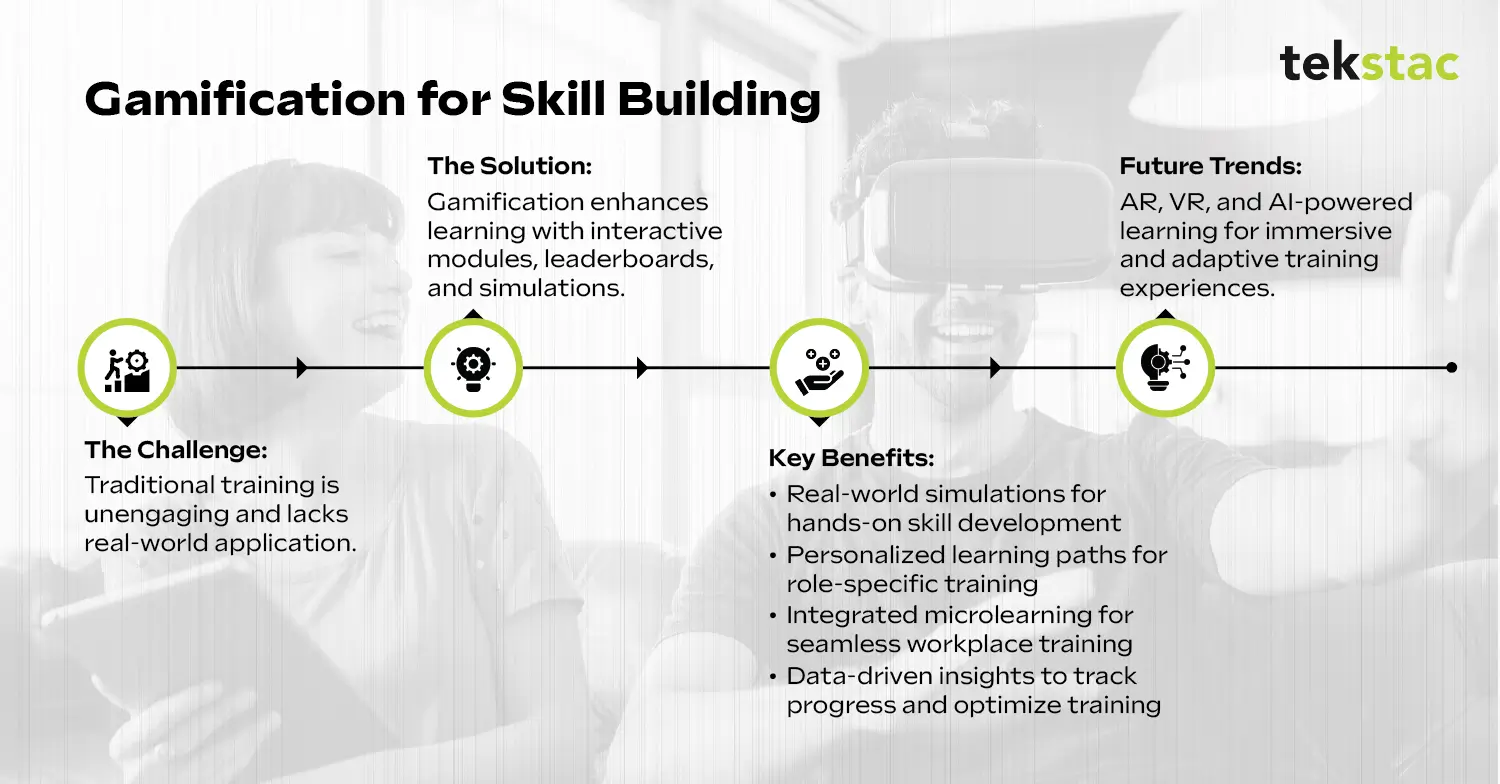
Workplace training often struggles to balance educational needs with the demands of daily operations. Embedding learning opportunities into employees’ workflows ensures minimal disruption and promotes the practical application of new skills.
For example, sales professionals might complete a brief training module on product features while using their CRM, immediately applying the knowledge in customer interactions.
Incorporating data analytics into training programs ensures that organizations can monitor effectiveness and make informed adjustments. Gamified systems often include metrics that track progress and measure outcomes, providing insights into individual and organizational performance.
Platforms offering detailed dashboards empower leadership to refine learning approaches continuously, ensuring alignment with broader business strategies.
While personalized learning is vital, collaborative approaches enhance engagement and promote innovation. Gamification encourages team-based problem-solving and knowledge-sharing, driving collective growth.
Research shows that collaborative learning methods are among the most impactful, especially when peers can engage in structured activities that challenge and develop their skills.
As technology evolves, gamification in skill building will become increasingly sophisticated. The use of advanced tools like augmented reality (AR) and virtual reality (VR) is already creating immersive training environments, while AI-powered personalization offers dynamic learning paths tailored to individual progress. To stay ahead, organizations must also keep an eye on the future of skill building in L&D, where emerging innovations will continue to reshape how employees acquire and apply skills.
Gamified learning transcends employee engagement, serving as a strategic asset to enhance organizational capabilities. By accelerating skill acquisition, promoting innovation, and aligning development with business goals, it equips enterprises with a competitive edge. To elevate your training programs, partner with specialized platforms and design a gamification strategy tailored to your needs. Make learning a catalyst for business growth today.
Gamification in Employee Assessment Tools is the next big move in 2026. Imagine a future where employees look forward to assessments. Sounds unreal? That’s exactly what Gamified Employee Assessment Tools are making possible in 2026.
Gallup estimates that employee disengagement costs companies $8 trillion worldwide, accelerating the shift toward gamified employee assessment tools that drive engagement and measurable results.
Through this article, we want to equip you with everything related to the buzz of gamified assessment tools in 2026. Ready? Free your employees and team from generic frameworks. Leapfrog to a world of immersive and interactive experience in your learning programs.
But, first things first!
Gamified employee assessment tools use game mechanics such as challenges, simulations, and scoring systems to evaluate employee skills, behavior, and performance. Unlike traditional assessments, these tools measure real-world capabilities in an engaging, low-stress environment. Organizations use them to assess skills more accurately, reduce bias, and gain actionable insights for hiring, learning, and talent development.
A Growth Engineering survey found that 90% of employees feel highly motivated by gamified tools. Blending gamification with cutting-edge AI, AR/VR, and data analytics, ensures your workforce stays engaged, future-ready, and consistently productive.
Let’s dive more and see what’s the reason behind the shift towards gamification in employee assessment tools in 2026.
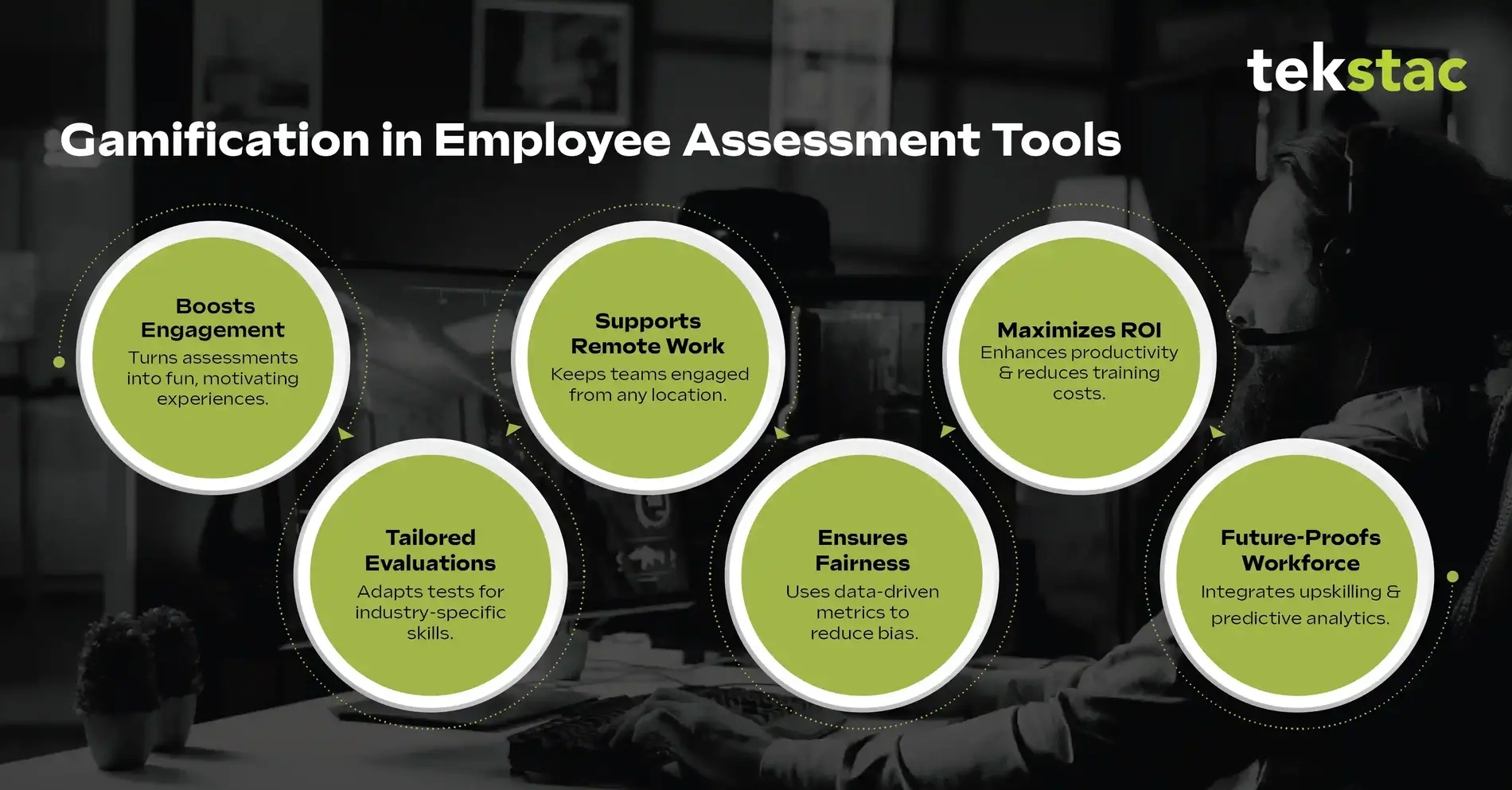
By transforming assessments into enjoyable activities, gamification ensures employees are motivated, productive, and aligned with company goals.
Infusing gamification in employee assessment tools, you can customize the evaluation for industry-specific challenges, from coding tests for IT professionals to sales simulations for retail.
Virtual gamified assessments keep teams engaged and evaluated, regardless of their location.
Gamification in the employee assessment tools reduces biases. It focuses on measurable performance metrics, ensuring fair and accurate assessments.
Gamified assessments improve productivity, reduce training costs, and increase retention. Additionally, it offers organizations a strong return on investment.
By incorporating upskilling and predictive analytics, it helps employees stay relevant in an ever-evolving market.
Code Challenges with Real-Time Feedback:
Developers can solve gamified coding problems, earning instant feedback and badges. It makes skill evaluation seamless as well as engaging for employees.
AI-Driven Learning Pathways:
Platform like Tekstac recommends personalized upskilling modules based on assessment outcomes, helping employees stay ahead of evolving technologies.
Hackathons for Skill Validation:
Gamified hackathons can be developed for employees where performance metrics assess creativity, technical skills, and problem-solving abilities.
Sales Scenarios with AR/VR:
Sales employees handle virtual customer interactions, building skills in negotiation and objection handling. The process can include rewards for successful outcomes.
Gamified Upskilling Modules:
Equipping employees with new sales techniques through interactive modules that track progress and reward achievements is a solid take.
Leaderboards to Drive Motivation:
Building Gamified leaderboards to foster healthy competition is a great way to start with gamification of employee assessment tools in 2026. Displaying sales metrics can help encourage employees to outperform while boosting morale.
Safety Training Simulations:
Creation of immersive scenarios for employees to learn safety protocols is a way forward. The gamified assessment tool can include earning points for accuracy and speed. This will help in reducing workplace risks.
Process Optimization Challenges:
Gamified tasks encourage employees to suggest improvements in operations, fostering collaboration and innovation.
Interactive Progress Dashboards:
Tekstac’s dashboards track and reward employee milestones. It also helps ensure transparency and encourage consistent performance.
Knowledge Retention Through Quizzes:
Interactive quizzes with rewards ensure employees retain vital training knowledge. It is a boon in driving better workplace applications.
Behavioral Skill Assessments:
Group challenges can help you assess teamwork, leadership, and communication. It also offers insights into interpersonal strengths.
Gamified Certification Programs:
In order to make learning paths motivating and achievement-focused, rewarding employees for completing certifications, can help.
Compliance Training with Gamification:
You can provide compliance training to employees easily with the help of Gamified assessment tools in 2026. Employees can complete mandatory compliance training through interactive modules, earning badges for accuracy and adherence.
Patient Handling Simulations with AR:
Healthcare professionals can practice virtual scenarios, honing critical decision-making skills while receiving real-time feedback.
Tracking Performance Metrics:
Gamification in employee assessment tools ensure that every healthcare professional’s progress is tracked and reported. In return, enabling better evaluations.
Microsoft, a global leader in technology and innovation, has continuously sought ways to enhance its employee development programs. The company recently recognized that traditional performance assessments, which focused solely on numerical ratings and feedback, were insufficient to foster engagement and continuous growth.
As a result, Microsoft sought to revamp its employee assessments by integrating gamification, providing employees with a more engaging, rewarding, and comprehensive way to assess their skills.
Microsoft introduced gamified assessments as part of their internal learning platform, “Microsoft Learn” with the goal of blending professional development with fun and competition.
Through interactive challenges, quizzes, and problem-solving scenarios, employees could assess their performance in real-time. As employees completed modules, they earned points, badges, and had their progress showcased on leaderboards.
To tailor the experience, Microsoft integrated gamification across different roles, from software developers to project managers.
For example, developers participated in coding challenges, earning badges for completing levels or solving coding problems within a set time. These gamified assessments were designed to be both educational and motivational, with a focus on increasing productivity and driving skill development.
The gamified assessment program had a significant impact on Microsoft’s workforce. Employee engagement in training and assessment modules increased by 40%, with employees expressing greater enthusiasm for participating in assessments. In fact, 80% of employees reported that they felt more motivated to complete their training due to the gamified elements.
Furthermore, performance evaluations post-assessment showed improvements in both technical skills and soft skills, as employees felt more invested in their learning paths. The company also noticed a reduction in the time spent on traditional performance reviews, as the gamified assessments provided instant feedback and measurable data for managers.
Microsoft’s gamified employee assessments allowed the company to foster a culture of continuous learning and development while keeping employees motivated and engaged. By offering personalized learning pathways, real-time feedback, and rewarding achievements, Microsoft not only improved employee skills but also created a more transparent, enjoyable, and effective evaluation process.
Gamification is more than a buzzword, it’s a transformative approach to employee assessment. Tekstac’s innovative platform redefines evaluations, blending interactive technologies with actionable insights to drive engagement and productivity.
From immersive AR simulations to personalized learning paths and predictive analytics, Tekstac equips organizations to unlock their workforce’s full potential.
With Tekstac, your team will not only meet but exceed the demands of 2026. Ready to redefine your employee assessments? Partner with Tekstac to build an engaged, future-ready workforce today.
1. What does gamification mean in employee assessments?
Gamification in employee assessments involves using game-like features such as points, rewards, and interactive tasks to make performance evaluations more engaging and motivating.
2. How does gamification improve employee assessments?
It boosts participation, provides real-time feedback, and makes evaluations more enjoyable, leading to higher engagement and accurate performance tracking.
3. Why are companies adopting gamified assessment tools in 2026?
Companies are using gamified assessments to enhance productivity, reduce biases, and ensure continuous skill development in a hybrid work environment.
4. Can gamification be applied to different industries?
Yes, gamified assessment tools can be customized for IT, sales, healthcare, and manufacturing, aligning evaluations with specific industry needs.
In today’s tech-driven corporate world, employee skill development has moved beyond being a corporate necessity to being a critical advantage. For the HR and L&D executives of tech companies, the challenge is not only in effectively onboarding employees but also in providing continuous post-onboarding skill upgrades, which is in accordance with individual development and organizational goals. Technology has become the foundation of today’s training, providing tools and platforms that enable employee growth and enhance training ROI.
This article discusses the role of HR and L&D professionals in leveraging technology in a highly impactful way to drive employee skill development post-onboarding.
Although onboarding can often build the platform for new hires, studies indicate important shortfalls in existing procedures. According to the eLearning Industry State of Employee Experience, 4 in 10 employees found their onboarding training outdated, and 1 in 3 regretted joining the company during this phase. These statistics underscore the need for organizations to not only revamp their on-boarding strategies but also create a seamless continuum of learning post-onboarding.
Beyond onboarding, the need for continuous skill development arises from:
For best results, HR and L&D executives will need to deliberately integrate technology, focusing on solutions that serve both organizational needs and learner needs.
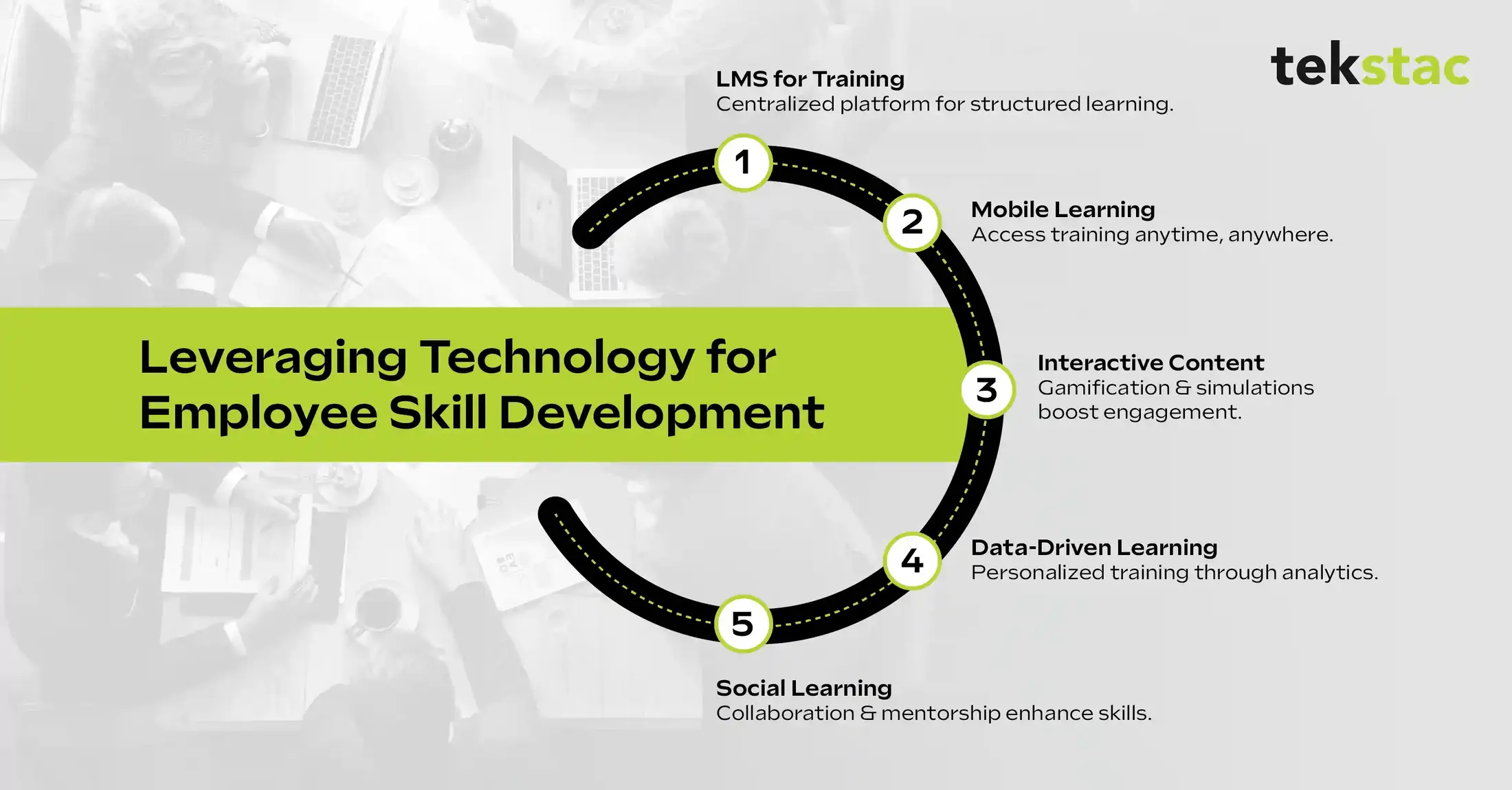
As per the 2023 Training Industry Report, 96% of large and mid-sized companies use Learning Management System (LMS) platforms for training management. These systems play the role of a centralized hub for organizing, distributing, and managing training content.
Nevertheless, the outcome of an LMS is determined by careful design and deployment. Barriers such as unnecessarily complicated user interfaces, absence of administrator support, and uninteresting workflows frequently stall LMS adoption. To address these, organizations should:
For medium-size companies or who have special requirements, an all in one skilling platforms that combine LMS functionalities can be an option that ensures functionality and freedom.
Mobile learning has changed the face of skill development as workers can access training anywhere, anytime. In a society where remote and hybrid work is the new normal, mobile-enabled platforms are available to serve varying learning styles and flexible scheduling needs.
Organizations should ensure mobile platforms:
Employee engagement can so heavily depend on the training content’s relevance and interaction. Research indicates that the use of interactive components such as videos, simulations, and gamified quizzes enhances retention rates greatly.
For instance:
Perhaps the most revolutionary application of technology in training has been the implementation of data analytics for tailored learning pathways. Based on metrics, such as skills inventory, skills gap, personal skills profile, course completion percentage, quiz score, and level of engagement, organizations can:
For instance, an employee who outperforms in pre-tests for some modules may be exempted from repetitive training procedures, saving time and frustration. This degree of personalization guarantees that learning is meaningful and desirable.
Collaborative platforms such as Slack, Microsoft Teams, or dedicated skilling forums can be leveraged to support peer-to-peer learning. Social learning fosters a sense of community, encouraging employees to share insights, discuss challenges, and learn from one another.
Key strategies include:
Not all training requires high-tech solutions. The process of conducting a feasibility study allows to know whether technology-as-a-solution fulfils the goals of the organization, objectives and budget. Key steps include:
Technological advancements are frequently met with resistance from both staff and managers. Overcome this by:
Skill development is a process and not a one-time event. Continuously update training materials based on industry developments, feedback from employees, and changes in business requirements.
Although technology is a great facilitator, it should not be used without human interface. Hybrid learning models-integrating digitally-based tools with face-to-face mentorship-provide an integrated approach. For instance, whereas a stand-alone upskilling content platform can provide basic knowledge, face-to-face workshops or individual coaching can be designed to tackle complex or subtle skills.
In today’s dynamic business environment, employee skill development is a continuous journey that demands strategic focus, thoughtful planning, and the right tools. Organizations that prioritize ongoing learning create a culture of adaptability and innovation, empowering their employees to meet current challenges and prepare for future opportunities.
To fulfill these objectives, companies need to adopt solutions that integrate modern technologies with pragmatic results. Platforms such as Tekstac illustrate this kind of thinking in that they provide end-to-end skilling solutions to help overcome, for example, some of the biggest challenges in workforce development. From immersive practice labs, to data-intensive evaluations, and real-time learning analytics, these platforms offer a scalable and formal means to talent transformation on a large scale.
By integrating advanced tools with carefully curated content and robust management features, organizations can ensure their training initiatives are both effective and sustainable. Working through skill gaps, nurturing innovation, or maximizing retention, a holistic platform approach can enable HR and L&D leaders to build talent teams prepared for the future of work.
The road to success in the end, rests in thoughtfully tech-enabled approaches that put the employee front and center of the learning experience-converting aspiration to action, skill by skill.
1. What is the future of employee skill development?
The future is hybrid—blending digital platforms with human mentorship to offer scalable, personalized, and effective learning experiences.
2. Why is continuous skill development important after employee onboarding?
Continuous skill development ensures employees stay updated with evolving technologies, stay engaged, and perform at their best long after the onboarding phase.
3. What’s the best strategy for selecting tech tools for employee training?
Evaluate training goals, employee learning styles, and budget. Choose tools that support multimedia content, scalability, and personalization.
4. How can companies address resistance to new training technologies?
Provide adequate trainer support, blend self-paced with live training, and involve employees in feedback loops to build trust and adoption.
Traditional classroom training is fading fast. To stay competitive, companies must rethink how their teams learn and grow. Business leaders across industries report significant skill gaps in their workforce, making the evolution of learning programs a critical priority. The key challenge lies in creating engaging learning environments that effectively bridge the gap between theoretical knowledge and practical business applications.
Let’s explore five proven workplace learning strategies that empower learning and development (L&D) leaders to transform routine training into engaging, performance-driven workplace learning experiences.
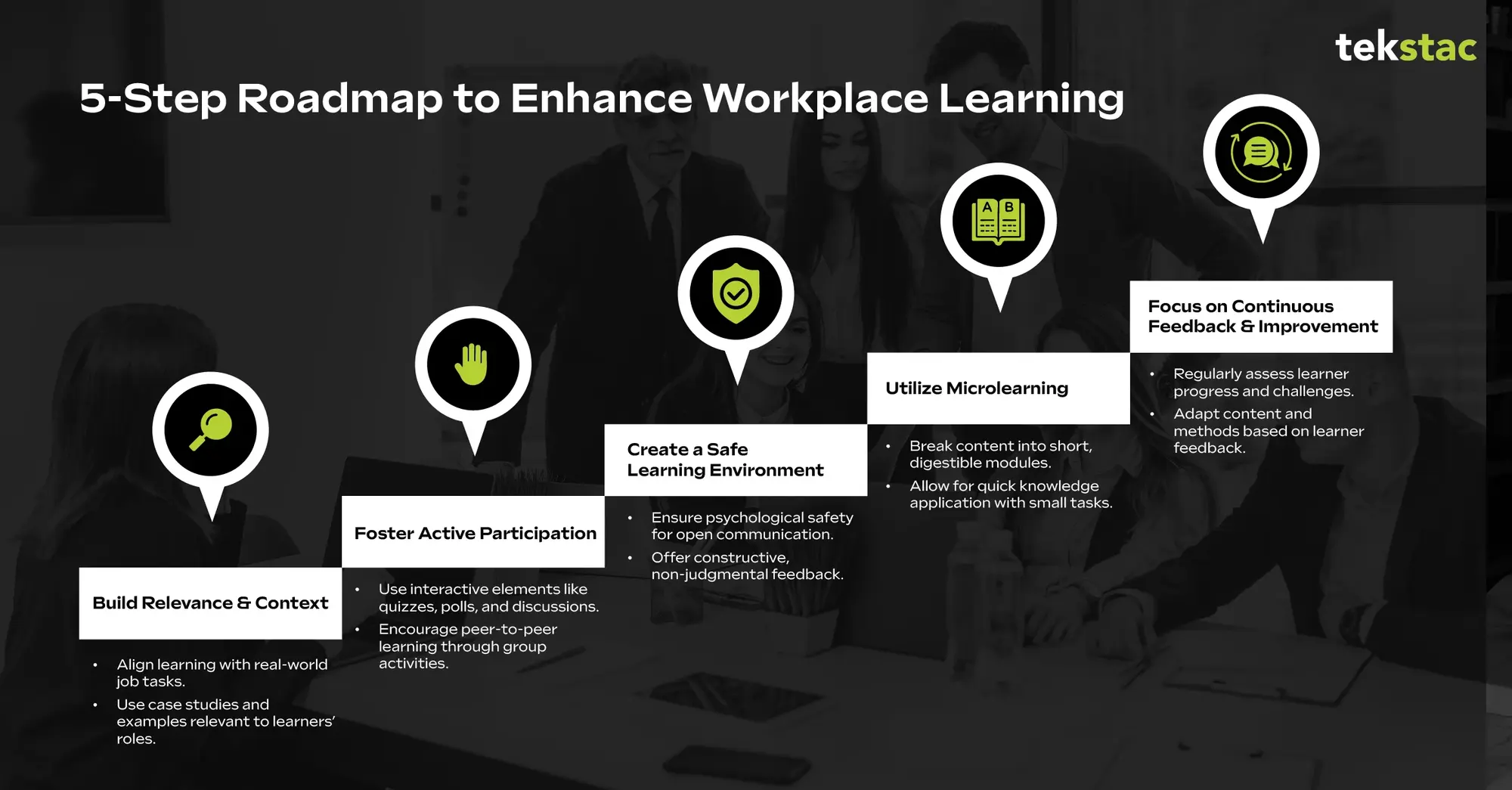
The disconnect between theory and practice frequently causes poor skill memory. Companies that implement experiential learning programs enjoy a 55% higher rate of skill acquisition than those that use standard training techniques, says the Josh Bersin Company’s Corporate Learning Report 2024.
Professionals may practice everything from cloud infrastructure to programming languages in real-time with Tekstac’s integrated lab environment, for instance, guaranteeing that abilities translate seamlessly to real-world work situations.
One-size-fits-all training plans are becoming obsolete. Learning in the modern workplace requires large-scale customization. IDC’s recent research shows that companies that use AI-driven learning systems see a 30% reduction in training time and a 45% increase in employee participation in development programs.
Making learning feel more like a customized path to mastery rather than a required task is crucial.
When workplace learning is smoothly incorporated into routine responsibilities, it is most successful. For example, a sales representative might access quick microlearning modules about new product features while updating their CRM entries, or a software developer could review code optimization techniques through integrated IDE plugins while writing code.
This method, which is frequently referred to as “learning in the flow of work,” enables staff members to apply newly acquired knowledge to actual problems right away.
Organizations can improve engagement and knowledge retention by providing easy access to learning materials in real-world work scenarios.
Modern L&D leaders require quantitative and qualitative data to measure learning effectiveness. While data analytics dashboards track measurable outcomes like completion rates, skill assessments, and performance improvements, qualitative feedback through surveys and team leader observations helps evaluate behavioral changes and practical application of new skills
Dashboards for advanced analytics make it easier to monitor program impact as well as individual progress. Businesses that successfully use learning analytics report a 41% boost in employee productivity and a 53% increase in employee retention, according to research from Brandon Hall Group’s Learning Strategy Study.
Organizations may track these KPIs in real time with Tekstac’s extensive analytics dashboard, which aids L&D leaders in making data-driven choices regarding their educational initiatives.
Creating chances for peer learning and information sharing can greatly increase engagement, even though individual learning routes are still vital. According to the Enterprise Learning Annual Report 2024 by Fosway Group, 94% of L&D leaders now place a high priority on collaborative learning strategies, with peer-to-peer learning having the greatest influence on skill development.
It takes considerable preparation and execution to turn traditional training into engaging workplace learning. Employee expectations and corporate goals must be met by contemporary workplace learning solutions.
How do you implement learning in the workplace?
Organizations frequently run across a number of challenges while implementing new learning methodologies.
Here’s how to deal with typical workplace learning obstacles:
You can handle time constraints with the use of contemporary workplace learning technology by:
Boost L&D involvement by:
Workplace learning is the integration of continuous, personalized, and collaborative training directly into daily workflows. It enables employees to build skills faster, apply them immediately, and drive measurable business performance.
The capacity to provide effective, engaging learning experiences is becoming increasingly important as firms continue to navigate the rapid changes in technology. According to McKinsey’s latest State of Organizations Report, 87% of executives report existing or expected skills gap in their workforce, indicating that transforming learning programs is a top priority.
The age of static, one-size-fits-all training is over. Next-gen corporate learning is agile, personalized, and immersive.
Beyond merely imparting knowledge, workplace learning aims to provide life-changing experiences that enable staff members to develop their abilities in the context of their regular jobs.
Effective workplace learning methods must be a top priority for firms if they want to remain competitive in today’s quickly changing business landscape. L&D leaders can establish learning environments that produce quantifiable business results by implementing the five strategies mentioned above and utilizing cutting-edge learning platforms like Tekstac.
Want to future-proof your workforce? Book a strategy session with Tekstac today and see how our workplace learning platform delivers results.
1. What is the future of workplace learning?
The future is agile, immersive, and personalized, leveraging technologies like AI, VR, and AR, and aligning learning initiatives more closely with business strategy to foster innovation and adaptability.
2. How can companies get started with transforming workplace learning?
Start with pilot programs, gather feedback, track engagement and outcomes with analytics, and iteratively refine learning strategies to align with both employee and business needs.
3. What is the 80/20 rule for learning?
The 80/20 rule for learning means that 80% of results come from 20% of focused effort. In workplace learning, it highlights prioritizing the most valuable skills and training activities that drive the biggest performance impact.
4. How does workplace learning impact employee engagement?
Engaging workplace learning links skill development directly to daily tasks, making employees feel more competent, confident, and connected to business outcomes.
Organizations are evolving faster than ever before, driven by technological advancements and shifting business demands. In this dynamic environment, traditional training approaches fall short of addressing employees’ unique needs and aligning with organizational goals.
As the skill gaps continues to widen, LMS adoption is accelerating, with the market projected to reach $57.43 billion by 2030. Businesses turning to AI-powered LMS platforms are seeing strong ROI—streamlined training, higher employee engagement, and noticeable productivity gains are making a real difference.
Step into the future of enterprise learning with personalized learning paths—modern LMS at its finest! These tailored journeys let employees grow at their pace, fueling personal excellence while driving organizational success.
Personalized learning paths are not just a trend—they’re a strategic imperative for businesses determined to stay ahead in a fast-changing world.
What sets personalized learning apart is its focus on aligning individual growth with business objectives. Unlike conventional training programs, which often take a generalized approach, personalized learning paths are designed to address specific skills gap and career aspirations.
Think of it as crafting a unique development journey for every employee. For instance, a new hire in sales may start with foundational skills like effective communication and gradually move toward mastering advanced negotiation techniques. Similarly, a tech professional could follow a learning path tailored to their expertise, beginning with coding basics and advancing to specialized fields like cybersecurity or AI.
This structured, goal-oriented approach not only boosts employee engagement but also drives measurable results for businesses, ensuring that workforce development directly supports strategic priorities.
Modern LMS platforms harness the power of AI and analytics to deliver truly personalized learning experiences. These technologies work by analyzing a range of data points—such as employee roles, past performance, skill levels, and preferences—and using this information to create adaptive learning paths.
Modern enterprise LMS platforms redefine learning through adaptive personalization, a cornerstone of their success.
One of the standout features of AI-powered LMS platforms is adaptivity. By continuously assessing progress, the system adjusts content delivery to match an employee’s current skill level. For example, if a learner struggles with a particular concept, the system might suggest additional resources or simpler explanations to help them overcome the challenge.
Adaptability is another key component. Employees learn best in different ways—some prefer videos, while others thrive on interactive exercises or written content. Modern systems cater to these preferences by offering diverse formats such as gamification, bite-sized modules, and even immersive VR experiences.
This combination of adaptability and adaptivity not only enhances the learning experience but also ensures employees stay engaged and motivated throughout their development journey.
While the benefits of personalized learning are undeniable, businesses often face challenges in implementing these systems effectively. Common hurdles include employee resistance, scalability issues, and difficulty in measuring ROI.
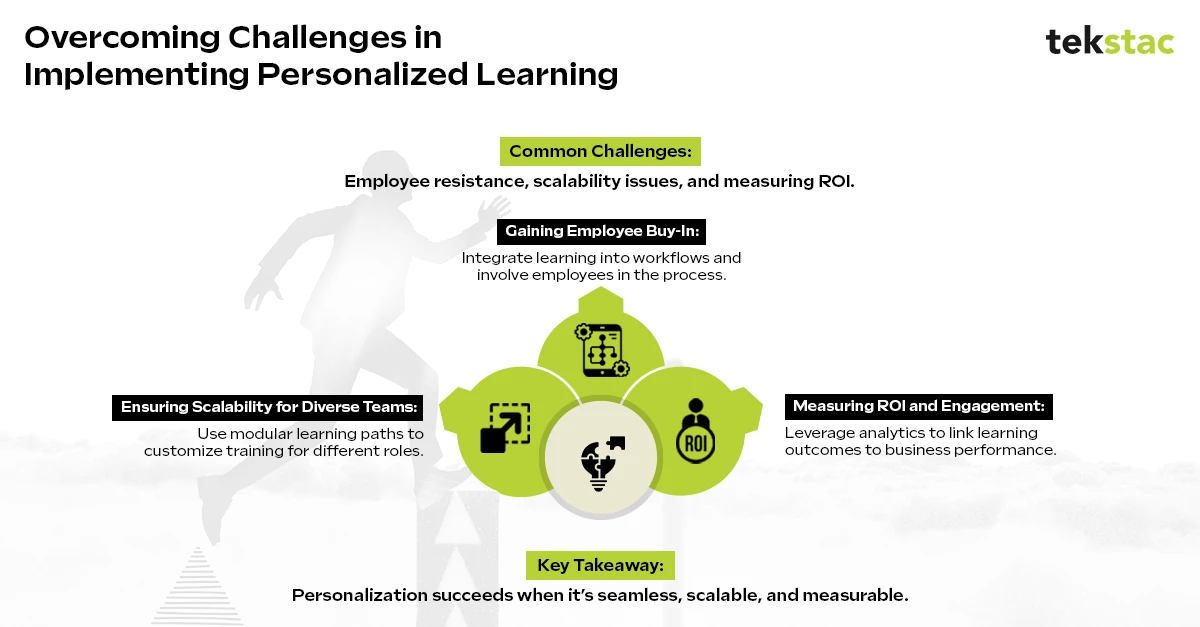
For many employees, personalized learning can initially feel like just another task on their to-do list. Resistance often stems from a lack of understanding about how these programs benefit their careers.
To win employees over, businesses must position personalized learning as a tool for growth rather than an obligation. Integrating it into existing workflows—like ongoing skill-building initiatives or project timelines—can make it feel less like a disruption and more like a natural part of their workday. Involving employees in the design process also helps, as they’re more likely to embrace systems that reflect their input and needs.
As organizations grow, they often struggle to scale training programs to meet the needs of diverse roles and departments. A rigid system can quickly become outdated or underutilized.
Scalable, modular learning paths are the answer. These systems allow businesses to customize training content based on individual or team requirements. For instance, a consulting firm can create separate pathways for entry-level analysts and senior consultants, ensuring that each group receives relevant training without unnecessary overlap.
Leadership often seeks tangible proof that training investments are yielding results. Without clear metrics, it’s challenging to justify continued investment in personalized learning initiatives.
Advanced analytics tools within LMS platforms can tie learning outcomes to business metrics like productivity, employee satisfaction, and retention. Regular assessments and feedback loops also ensure that training remains aligned with evolving business goals.
Learning pathways are more than just a roadmap—they’re a strategic enabler for employee growth and organizational success. By breaking down complex learning objectives into manageable steps, these pathways make skill-building more accessible and less intimidating.
For example, a marketing professional might start with general strategies like brand marketing and gradually move on to specialized topics like SEO, social media analytics, or email campaign optimization. This structured approach builds confidence, keeps employees focused, and ensures continuous progress.
From a business perspective, learning pathways lead to better-aligned teams that are equipped to tackle challenges head-on. Employees gain the skills they need to excel in their roles, while companies benefit from a more skilled and motivated workforce.
The future of corporate learning lies in flexibility, accessibility, and data-driven customization. Personalized learning paths integrate seamlessly into this vision, transforming LMS platforms from simple training tools into strategic assets.
These features ensure that learning systems remain dynamic and responsive, capable of adapting to changing business priorities and employee needs.
Personalized learning paths are more than a feature—they’re a transformative approach to employee development. By leveraging the power of AI, advanced analytics, and adaptive technologies, modern enterprise LMS platforms deliver training that’s as dynamic as today’s business environment.
For employees, these systems offer a clear path to growth, building confidence and enhancing job satisfaction. For organizations, they represent a strategic advantage, ensuring that workforce development aligns with business objectives.
Ready to transform your learning strategies? Schedule a demo today and see how personalized learning paths can elevate your workforce to new heights!